
AMI Project Key in Reversing Non-Revenue Water, Restoring Public Trust
One aspect of advanced metering infrastructure (AMI) that is attractive to water systems is the positive impact the technology can have on multiple aspects of the utility – from meter reading and data collection to billing and customer service.
Such is the case for the City of Jackson, Mississippi, which, despite experiencing some high-profile water challenges in recent years, is a worthwhile case study in turning around a troubled system – with advanced metering at the forefront.
Jackson’s Recent Struggles
The issues for Jackson’s water system (JXN Water) stem back many years and are multifaceted. A declining population and shrinking tax base in recent decades led to poor maintenance and upkeep on its aging water infrastructure. To make matters worse, a failed attempt at getting the system headed in the right direction didn’t help.
In 2013, the city entered into a multi-million-dollar performance contract to do a mass-meter exchange, implement AMI and upgrade the billing system, along with some other infrastructure repair projects. But the program was unsuccessful, and the new meters failed to properly connect with receivers, creating billing problems. The program ended in Jackson suing the service company and subcontractors, resulting in a nearly $90 million settlement for the city in 2020. With one-third of the settlement going to the lawyers, and the balance primarily used to support other city needs, the water and sewer system was left with a non-functioning metering system and debt payments on the outstanding $89 million in revenue bonds.
In the aftermath of the failed meter program around 2015, customers went unbilled and only a portion of the customer base paid estimated bills. All the while, water service continued.
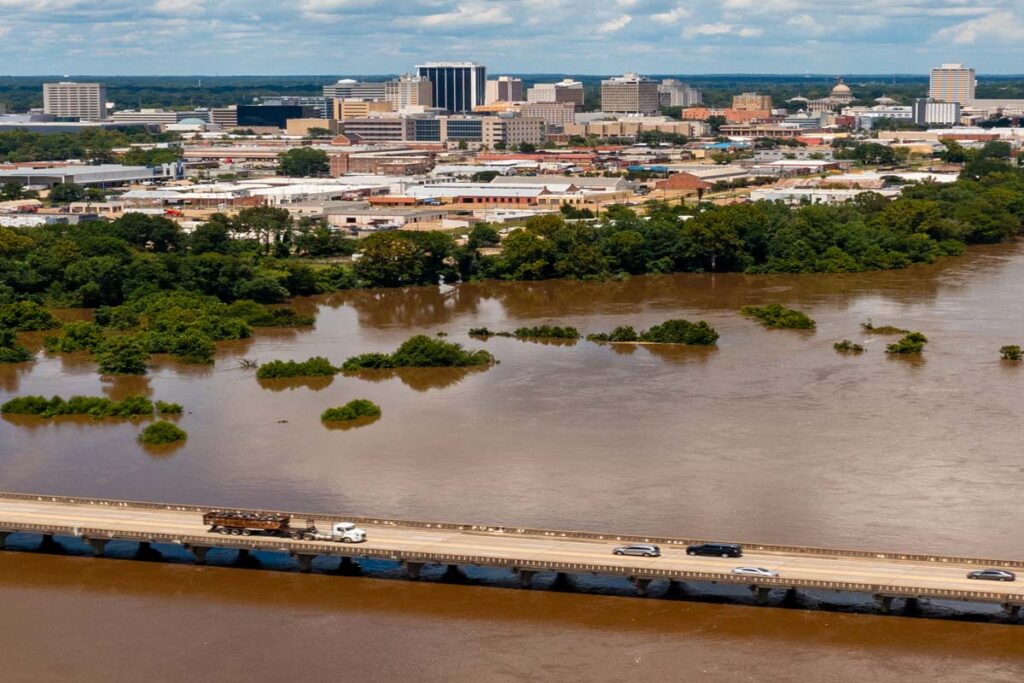
Then in late July 2022, flooding of the Pearl River resulted in rapid changes in source water quality that created treatment challenges. With limited trained staff to react to the water quality changes, the treatment process failed, ultimately taking the O.B. Curtis Water Treatment Plant offline, reducing pressure throughout the system. The pressure issues resulted in low or no water pressure for many Jackson customers and a citywide boil-water notice was issued on July 29.
By Aug. 29, continued failure of the water system forces the state to step in and declare an emergency, assuming control of the water system. The federal government followed suit, with then-President Joe Biden declaring the first-ever federal disaster for an infrastructure failure. Parts of the water system were prevented from delivering any running potable water to most of the population of approximately 160,000 served. The boil-water notice remained in effect until Sept. 15 and the situation made national headlines.
Staffing and Expertise
Amid the crisis in summer 2022, Jackson dealt with resource shortages that resulted in a lack of technical and utility management experience on staff.
As a result of the federally declared disaster, a Stipulated Order, essentially a federal receivership, was negotiated between the U.S. Environmental Protection Agency (EPA), the U.S. Department of Justice and the City of Jackson, and gave way to onboarding veteran water utility executive Ted Henifin. Henifin was assigned to serve as interim outside manager at JXN Water to lead rapid restoration of the system and put it on a sustainable path forward.
Henifin’s last major role was general manager of Hampton Roads Sanitation District (HRSD) in Virginia Beach, Virginia, which he departed at the end of 2021. His career spans 40 years and he has held roles in public works and utilities in all levels of government.
Addressing Unbilled Consumption
Prior to the receivership and Henifin’s arrival, the city had begun a new effort to upgrade its degraded metering infrastructure and correct the billing debacle, which went on from roughly 2015 to 2022.
Henifin says the billing problems caused by the prior failed meter program was the foundation of Jackson’s challenges.
“It was a good 6-7 years of unmetered consumption pretty much across the board,” he says. “It was a situation where they weren’t reading meters at all, and there’s no confidence in any meter read because of a failed system, and you had city leadership telling people not to pay bills.”
In addition, residents had significant leaks on their private property they weren’t aware of. Since residents weren’t getting billed, it was one less indicator of a leak and many went unnoticed.
Unbilled consumption affected the entire system, with about half of JXN Water’s customers choosing not to pay. The other half continued to pay estimated bills. By December of 2022, only about 54% of revenue from water rates was collected. On a normal basis, Jackson’s water rates would result in revenue of around $50 to $60 million per year, and the city was averaging in the range of $30 million per year.
JXN Water was putting about 55 million gallons of treated water per day into the system and only about 18 million gallons were delivered to customers.
As a result, the utility cut staff, salaries and maintenance initiatives.
Shutoffs for nonpayment were implemented for a brief period in 2019 but were cancelled amid the COVID-19 pandemic, and unbilled consumption persisted.
“It’s got to be one of the most unique situations for a utility in the country – that we got to a point where there was so little consequence, that people just chose not to pay for so long,” Henifin says.
AMI Deployment
Jackson, still saddled with the debt service related to the failed 2013 contract, did not have the ability to provide capital for the new AMI system it needed.
In 2021, Jackson entered into a metering-as-a-service contract with Sustainability Partners, an approach the city hoped would reduce risk and offer more flexibility for ongoing meter maintenance.
“Essentially what metering-as-a-service provides is the opportunity for utilities to get a new AMI system with no upfront capital costs and really no risk to the customer either,” explains Allison Wallace, infrastructure specialist at Sustainability Partners.
Sustainability Partners provided all the capital up front to implement Jackson’s AMI system.
JXN Water is not billed until the meter is reading to a collector. JXN Water is then charged a usage rate per meter, per month.
The metering-as-a-service model is designed to protect against unmetered consumption, multi-year delayed deployments and outdated infrastructure technologies. Wallace says it also helps avoid situations like the one Jackson was in – having a failed system while still paying for it.
“It was the ideal situation for the City of Jackson because they still owed millions on this [previous] failed AMI project,” she says. “It really was a perfect partnership.”
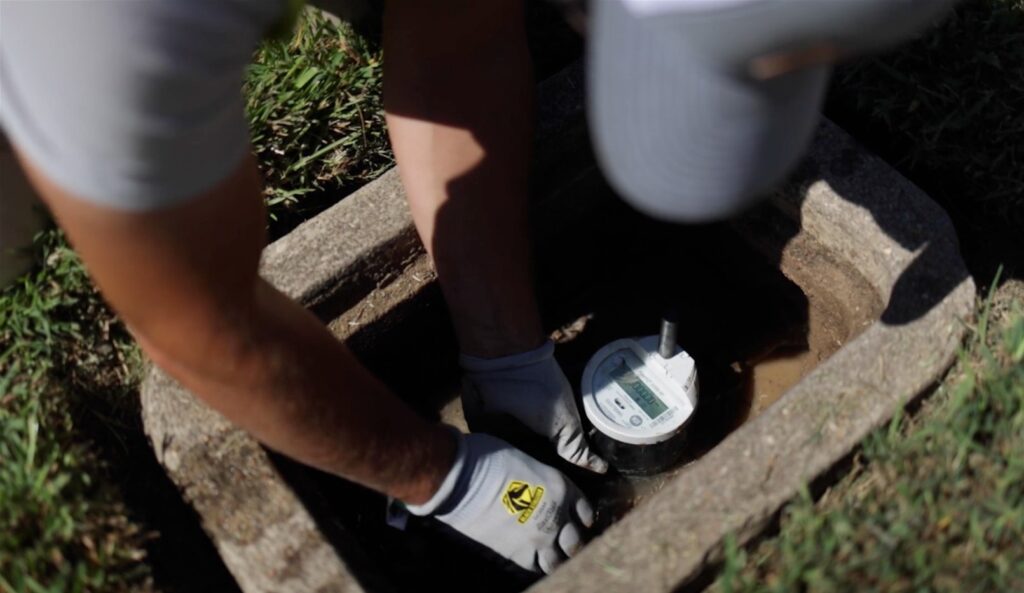
The installation and deployment was subcontracted to Hammond, Louisiana-based UMS. The installation of about 54,000 commercial and residential meters was completed in 2025.
Wallace says the revenue that Jackson has been able to start collecting compared to before when doing estimated bills is significant.
“Now customers are starting to gain trust in the City of Jackson again because they are getting accurate bills and they’re getting a bill every single month,” she says.
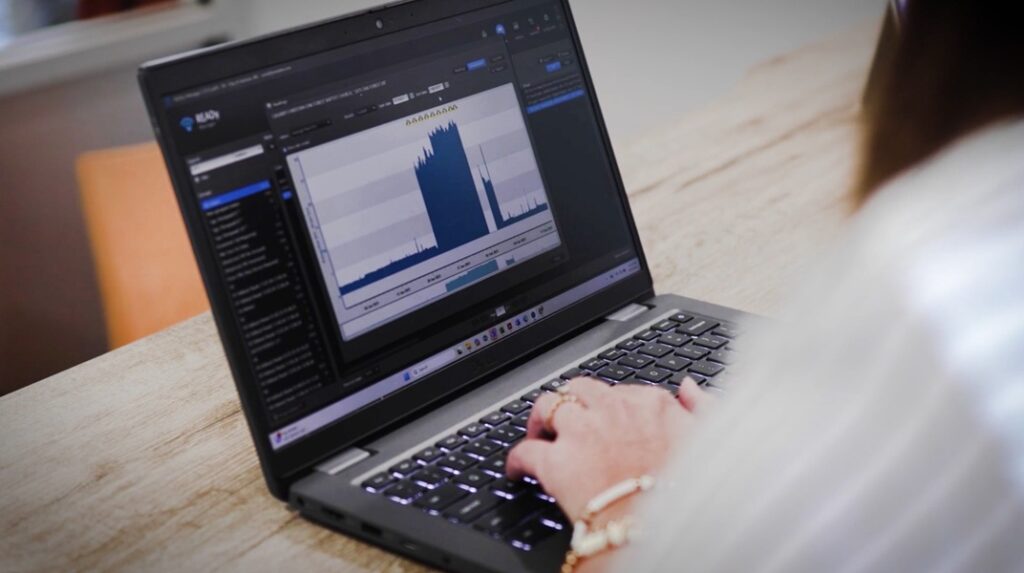
Sustainability Partners served as customer representative during deployment and now retains that role post-deployment, coordinating vendor relations. If a meter or collector stops working, Sustainability Partners will coordinate with the vendor on any needed maintenance for the life of the contract. The Kamstrup water meters have a 20-year life and help provide data analysis and insights on usage trends, peak demand periods and customer behavior. In addition to the meters, Jackson installed 18 collectors spread over the service area. JXN Water gets hourly readings on the system to drill down on consumption patterns.
“That’s where we can see the impact of not having metered flow for so long,” Henifin says. “A significant number of customers have ongoing, long-term leaks – ranging anywhere from 2 cubic feet per hour to 200 cubic feet per hour.”
Although leaks were identified, having more accurate readings from the new meters resulted in some initial high bills that surprised and frustrated customers. To help facilitate the process of fixing leaks, JXN Water contracted a local plumber to assist with identifying and verifying leaks on customer property if they couldn’t be located.
Henifin says he knew rebuilding trust with Jackson’s water customers would be difficult.
Initially, he proposed billing customers for water based on property value instead of implementing the metering project. But with all the benefits of the AMI system – including acoustic leak detection built into the Kamstrup meters – Henifin says he’s been convinced JXN Water made the right decision given the data collection and insights on customer leaks.
“I never anticipated the impact of those leaks and the information we were going to get from AMI, especially during the deep freeze times when we’re looking at consumption through meters,” he says. “It’s proven to have great data to manage our water system with, that I would have missed entirely had we gone with a property value-based approach.”
As of April 2026, JXN Water had reached 90% of revenue collected – up from the earlier mentioned 54% of total revenue collected from water rates. Henifin says the goal is to get to 95% or above, which he says is more in line with a typical water system.
Funding
In terms of funding, the City of Jackson received $600 million in disaster supplemental funding under the Consolidated Appropriations Act of 2023. The initial $115 million award went to JXN Water and went toward water infrastructure repairs.
To authorize the funding, EPA used its emergency authority under the Safe Drinking Water Act (SDWA) Section 1442(b) to award funding to JXN Water. Section 1442(b) allows EPA to make grants to publicly owned water systems to assist in responding to and alleviating emergencies affecting public water systems that are determined to present substantial danger to public health. JXN Water also received some grant funding from EPA.
Without those funding mechanisms, Henifin says strain on the system would be even greater and that local rates would have needed to be raised much higher. But despite the short-term federal support, he says the key to continuing to get Jackson back on track lies locally.
“The only way you’re going to get this system back on a path to its own self-sustainable financial future, is people have to pay for the water,” he says.
Looking Ahead
The past few years have been eventful for JXN Water. There’s no timetable for Henifin’s exit from Jackson but he says the goal is for the system to be self-sufficient and meeting all costs locally by 2029.
The utility currently has a staff of 28, mostly comprised of billing personnel, with Henifin leading all managerial and financial activities. Treatment plant and pipe repair work is contracted out to different firms, among a number of other professional service contracts that help to manage other operations.
There have been efforts in Mississippi to regionalize Jackson’s water system. As of June 2026, a bill had been signed by Gov. Tate Reeves to create the Jackson Metro Water Authority, but a U.S. district judge blocked transfer of control of the water system while the federal receivership is still in place, per a report from the Mississippi Clarion Ledger.
Henifin says the AMI deployment through the partnership with Sustainability Partners has impacted the culture at JXN Water, starting with building trust and confidence in the billing system.
Wallace agrees, adding that the AMI project helped lay the foundation for JXN Water’s new direction while putting the community on a path toward a sustainable water system.
“Our project in Jackson, Mississippi, has been the most rewarding because they were a community that truly needed it,” says Wallace. “They still have a long way to go, but they have made significant improvements and one of those improvements was the AMI system. I’m very proud that we had a hand in helping that community.”

Andrew Farr is the managing editor of Water Finance & Management. He has covered the U.S. water utility sector for 14 years along with other construction markets for publisher Benjamin Media, based in Richfield, Ohio.








Leave a Reply