
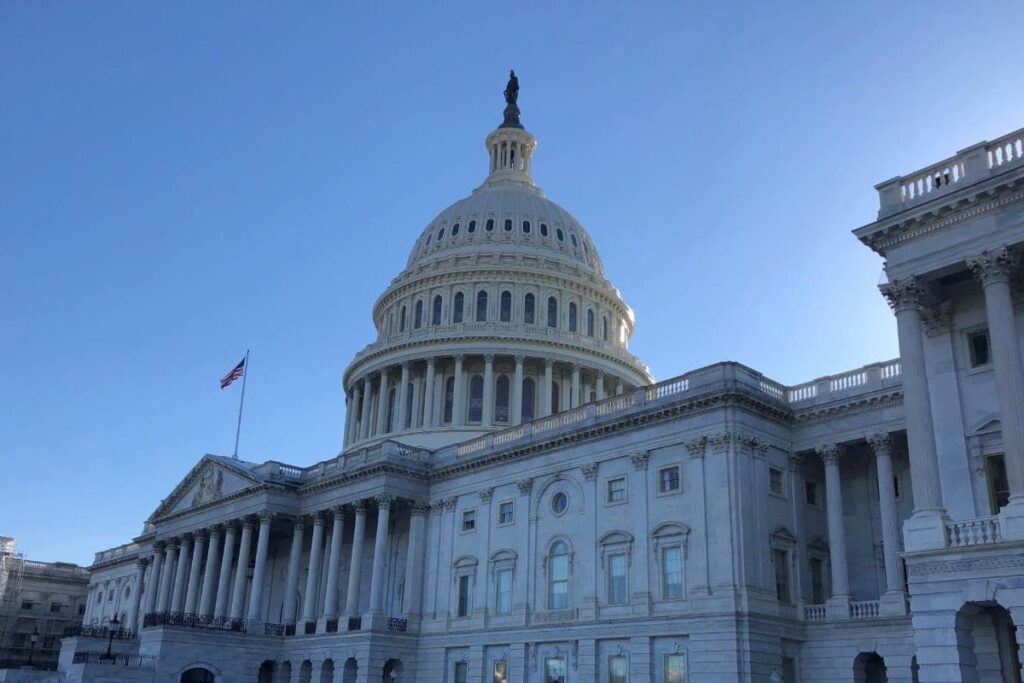
The Senate Environment and Public Works (EPW) Committee voted unanimously to pass the bipartisan Water Resources Development Act (WRDA) of 2026, that would also reauthorize the Drinking Water and Clean Water State Revolving Funds (SRF) programs.
The Water Resources Development Act is biennial legislation that authorizes flood risk management, navigation and ecosystem restoration projects for the U.S. Army Corps of Engineers.
The bill authorizes 61 feasibility studies and 15 new or modified construction projects across the country. WRDA 2026 also reauthorizes the U.S. Environmental Protection Agency’s (EPA) Drinking and Clean Water SRFs.
The bill’s introduction on July 15 was led by Chairman Shelley Moore Capito (R-W.Va.), Ranking Member Sheldon Whitehouse (D-R.I.), Sen. Kevin Cramer (R-N.D.), Sen. Angela Alsobrooks (D-Md.), and Sen. Adam Schiff (D-Calif.). The House Transportation and Infrastructure Committee unanimously passed companion legislation a day earlier on July 14.
Specifics
- Under the bill, the Drinking Water State Revolving Fund would be reauthorized at 16.5 billion for fiscal years 2027 through 2030: $3.75 billion for fiscal year 2027, $4 billion for fiscal year 2028, $4.25 billion for fiscal year 2029, and $4.5 billion for fiscal year 2030.
- The CWSRF would be reauthorized at at four-year total of 14 billion: $3.5 billion for each of fiscal years 2027 through 2030.
- The Water Infrastructure Finance and Innovation Act (WIFIA) would also receive $260 million in reauthorization funds.
The bill also authorizes two cybersecurity programs, the Midsize and Large Drinking Water System Infrastructure Resilience and Sustainability Program and a new program to encourage participation in the Water Information Sharing and Analysis Center (WaterISAC).
Reaction
“The drinking water and clean water provisions within the Water Resources Development Act of 2026 are a positive step toward strengthening the federal partnership needed to sustain safe and reliable water service,” said American Water Works Association (AWWA) CEO David LaFrance.
“AWWA is encouraged that the Senate Environment and Public Works Committee recognizes the importance of reauthorizing core water infrastructure financing programs, including the SRFs and WIFIA, at robust levels. These financial programs allow communities to pay for essential water projects, lowering the cost of debt and reducing the impact on household water bills.
“We are grateful to the committee for its work and look forward to working with Congress to ensure these critical programs are reauthorized and fully funded moving forward,” LaFrance added.
The National Association of Clean Water Agencies (NACWA), representing public wastewater and stormwater agencies, said it commends the efforts being made to reauthorize the State Revolving Funds, a vital federal funding mechanism for water and sewer projects.
“NACWA applauds the important bipartisan progress the Senate Environment and Public Works (EPW) Committee has made through Monday’s reauthorization effort,” said NACWA CEO Adam Krantz. “This proposal to reauthorize key initiatives including the Clean Water State Revolving Fund and the Water Infrastructure and Innovation Act program demonstrates a strong commitment to support public clean water utilities and the essential services they provide for their communities’ economic, environmental and public health.”
How Congressional Earmarks Are Draining America’s Water Funds
“There has not been a time when a strong federal funding commitment has been more important as clean water utilities and the customers they serve struggle with significant affordability challenges,” Krantz added.
According to EPA, the Drinking Water and Clean Water SRF programs have provided more than $265 billion to support 76,000 projects since their creation.
AWWA’s recent Beyond the Replacement Era report shows that communities will need to invest $2.1 trillion to $2.4 trillion through 2050 to replacing aging drinking water infrastructure, enhance treatment, and ensure resilient systems and supplies.
Source/s: Senate EPW, AWWA, NACWA










Leave a Reply