

According to a new research report from IoT analyst firm Berg Insight, the installed base of water utility advanced metering infrastructure (AMI) endpoints in Europe and North America is set to double from 2024 to 2030.
At the end of 2024, the combined installed base of AMI endpoints in Europe and North America amounted to 66.0 million units. This number is expected to grow at a CAGR of 13.3 percent to reach 139.5 million in 2030. The total number of communicating utility water meters – including both AMI and AMR – will at the same time grow from 170.5 million units in 2024 to 224.6 million units in 2030. AMR includes metering points that require readings through drive-by or walk-by operations while AMI involves a fixed network communications infrastructure and supports true IoT connectivity.
“The market is experiencing a return to stable supply chains following the disruptions caused by the Covid-19 pandemic, alongside significant commitment from water utilities to implement smart metering technologies,” said William Ankréus, IoT analyst at Berg Insight. “Adoption is gaining significant momentum in key markets, driven by national funding initiatives and pressure from regulatory bodies.”
In terms of AMI connectivity, LoRaWAN and 3GPP-based LPWA technologies such as NB-IoT and LTE-M continue to be the fastest growing technology types for new water AMI deployments in Europe and North America. In North America, LTE-M currently constitutes the single fastest growing technology for new water AMI deployments. In Europe, Spain has emerged as the leading European adopter of 3GPP-based LPWA communications for water AMI with several major utilities in the country launching large-scale rollouts based on NB-IoT. The interest in 3GPP-based LPWA is also particularly strong in markets such as the U.K., Italy and the Baltics while demand for LoRaWAN has so far been more widespread across the entire European region.
“Proprietary and EN 13757-based RF communications technologies currently have a strong footprint in both the European and North American markets,” Ankréus continued. “These technologies are anticipated to remain pivotal connectivity options for water AMI projects in the foreseeable future. Nevertheless, LoRaWAN and cellular communications are rapidly growing and are poised to capture a larger share of AMI shipments in the years ahead. This shift has created significant opportunities for MNOs and LoRaWAN network operators, which have increasingly taken on the role as prime contractors for meter replacement projects, particularly in Europe.”
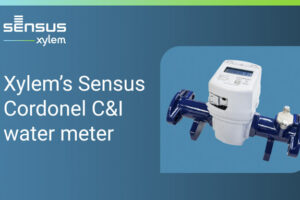
At the end of 2024, the companies that had accumulated the largest installed bases of water AMI endpoints in Europe included Diehl Metering, Itron, Sensus (Xylem), Birdz (Veolia) and Kamstrup. The top five in North America were Sensus, Badger Meter, Itron, Aclara (Hubbell) and Neptune Technology Group. Top vendors in the two regions moreover include Honeywell, the Arad Group, the Minol-ZENNER Group, Mueller Systems, Apator, Maddalena, Sagemcom, Landis+Gyr and Axioma Metering. The SUEZ subsidiary SUEZ Smart Solutions also constitutes a key player in the European water AMI market by having been instrumental to the development and deployment of Wize technology.
More information on the full Berg Insight report is available here.
About Berg Insight
Berg Insight is a dedicated M2M/IoT market research firm based in Sweden. We have been specialising in all major M2M/IoT verticals such as fleet management, car telematics, smart metering, smart homes, mHealth and industrial M2M since 2004. Our vision is to be the most valuable source of intelligence for our customers. Berg Insight offers numerous market reports, detailed market forecast databases and advisory services.
Source: Berg Insight








Leave a Reply