
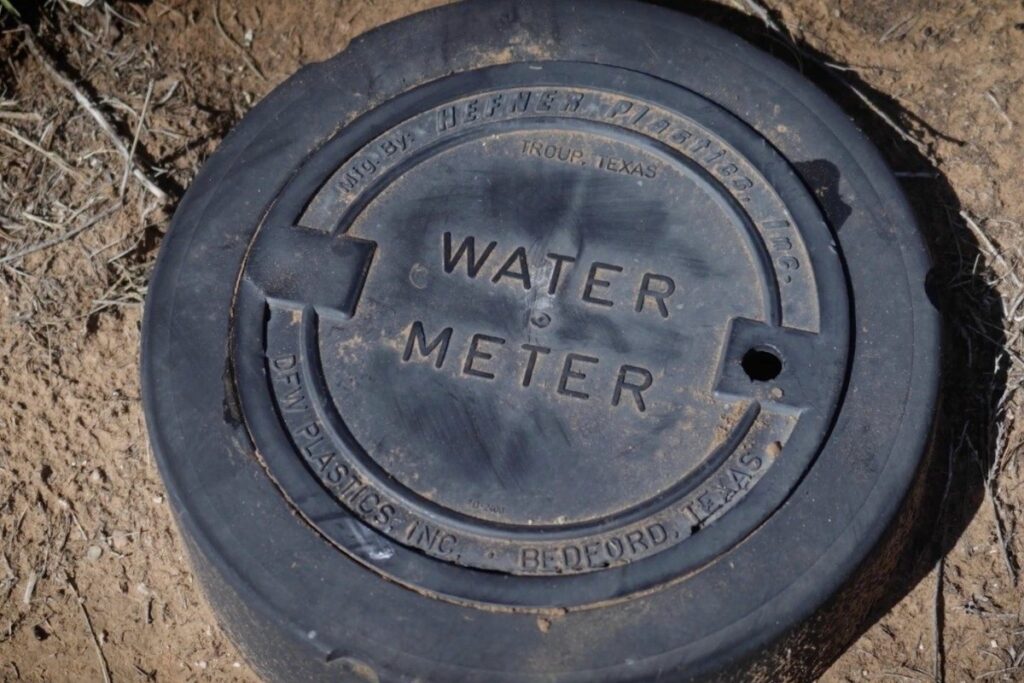
Water Co-op Predicts Costs, Reduces Water Loss with Metering as a Service
By Maia Rodriguez
When the Roosevelt County Water Co-op in eastern New Mexico evaluated its aging meter system, the findings were clear: the decades-old manual meters were no longer meeting the community’s needs. Persistent leaks, mounting water loss, and costly inefficiencies underscored the urgency for change.
Like many rural utilities, the Co-op faced a familiar challenge – how to fund a major capital investment. The solution came not in traditional grants or loans, but through Metering as a Service (MaaS), an innovative model that shifts risk, management, and cost predictability to a third-party provider.
Exposing Operational Inefficiencies in Manual Meter Reading
Until recently, Roosevelt County’s 1,500 meters were read manually each month by field staff, with office personnel entering data by hand. This process consumed days of staff time, allowed room for bill calculation errors, and left customers vulnerable.
“If a leak began just after a meter was read, it could continue undetected for nearly a month,” explained General Manager Ursula Parker. “That meant customers were often stuck with higher bills, and the Co-op was purchasing more water than it could bill.”
Accuracy had also deteriorated over time. Some meters no longer registered small leaks, compounding losses for both the utility and its members. By 2022, the utility was paying for significantly more water from its wholesale provider, the City of Portales, than it was able to sell to its members.
The disconnect was costly and unsustainable. Each gallon of water lost represented both a financial burden and a strain on the region’s limited supply. As Parker put it, “It wasn’t just about inefficiency – it was about protecting our future.”
The Benefits of Metering as a Service
At the 2022 New Mexico Rural Water Association conference, Parker learned about MaaS, a model that addresses both infrastructure and financial barriers.
Under MaaS, a third-party partner handles the funding, procurement, installation, and maintenance of the AMI smart metering system while managing data collection and software upgrades. In return, the utility pays a predictable service fee, removing large upfront capital costs and preventing unexpected expenses from equipment obsolescence.
For Roosevelt County, Sustainability Partners served as the project manager, overseeing both the product vendor and installation subcontractors. The model allowed the utility to implement a complete system upgrade without waiting years for federal grant cycles.
“Upfront capital is always a challenge,” Parker said. “With Metering as a Service, we can budget with confidence knowing the monthly service fee is stable and the responsibility for keeping the system current rests with Sustainability Partners.”
This shift is significant. Traditional infrastructure funding often requires lengthy applications, competitive grants, or voter-approved bonds. Even when funds are awarded, they rarely cover the total cost, and utilities are left to shoulder additional debt, delay projects, or proceed with a less than adequate solution. By contrast, MaaS transfers responsibility to the provider, and fills a critical gap by giving utilities access to technology they would otherwise be unable to afford and implement across the system.
Technology That Pays Dividends
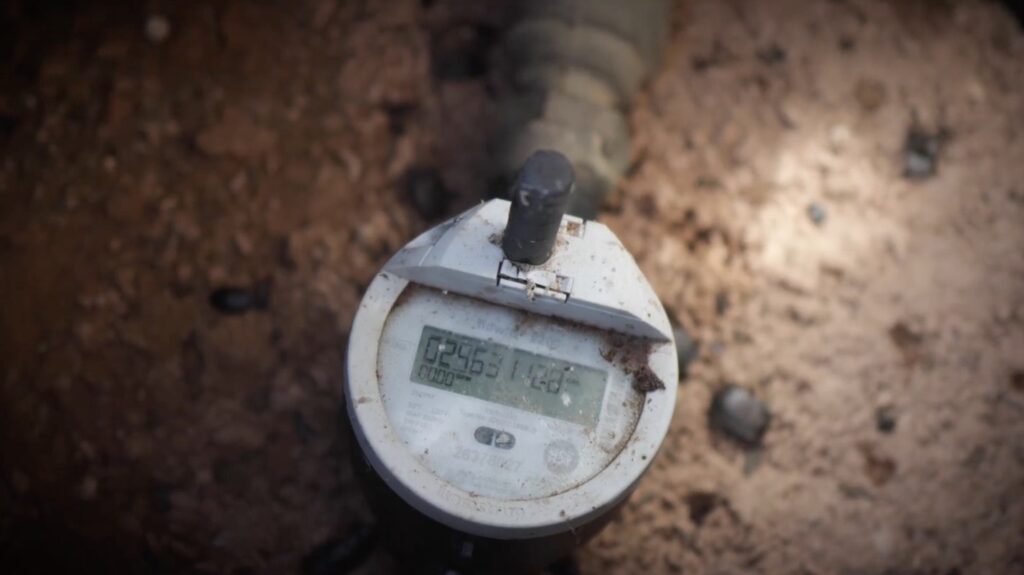
The Co-op’s new smart meters, Kamstrup flowIQ 2200 models, offer advanced features such as temperature monitoring and acoustic leak detection. These meters are hermetically sealed to prevent damage, can be installed in multiple orientations, and are designed for longevity in harsh environments.
Coupled with DXmic Pro digital ground microphones from Fluid Conservation Systems, the technology allows staff to pinpoint leaks quickly and accurately. The system does more than detect that a leak exists – it identifies where it is occurring, which dramatically reduces repair time and its associated costs.
The results were immediate. During an unseasonal cold snap in 2022 before the upgrade, members lost more than 2.5 million gallons of water. After the transition, leak detection alerts reduced losses dramatically. In one instance, a leak at Parker’s own family home was caught early, limiting water loss to 7,000 gallons – far below what would have occurred under manual metering.
“This technology has shifted us from reactive to proactive,” Parker noted. “We can now protect our members from excessive costs while preserving a critical resource.” Parker estimates that catching leaks early has resulted in 29 million gallons less water usage in 2024 than in 2023, the first full year of the new meter installation.
Customer Service and Community Trust
Beyond financial savings, the system has improved relationships between the utility and its members. Under the old system, customers often discovered leaks only after receiving a high bill, creating frustration and mistrust.
Now, the Co-op can proactively contact members when irregular usage is detected. Parker shared that staff recently reached out to several homeowners who were unaware of leaks until they were notified. Those members avoided costly bills, and the utility reinforced its role as a trusted partner in the community.
“Before, we were always a step behind,” Parker said. “Now, we can provide better service and demonstrate that we’re looking out for our members’ best interests.”
Predictable Costs, Reliable Service
Equally important to the Co-op is budget certainty. With MaaS, the utility no longer faces sudden six-figure costs for unexpected equipment replacement or software changes.
An example Parker points to is when manufacturers phase out hardware or data collectors. A single unplanned replacement could cost a small utility $100,000 or more. Under MaaS, those risks are funded by the provider, allowing Roosevelt County to focus on operations rather than scrambling to fund emergencies.
The installation itself was completed in just eight months, and the model allows for flexible scaling of future deployments. What seems like a rapid turnaround is typical for MaaS projects, where the service provider streamlines coordination and oversight.
For Parker and her board, the decision was straightforward: “Number one, it’s a predictable cost – you know what it’s going to be,” she said. “And number two, when issues arise, support is immediate. Our board saw that as a major benefit.”
A Model for Utilities
The Roosevelt County Water Co-op’s experience demonstrates the value MaaS can bring to utilities struggling with deferred capital needs, grant uncertainty, and aging infrastructure. Nationwide, thousands of utilities face the same challenges: limited staff, outdated equipment, and unpredictable funding.
By transferring responsibility for maintenance and upgrades to a service provider, utilities can achieve operational efficiency while maintaining financial stability. MaaS also allows boards and managers to focus on long-term strategy and member service rather than short-term crisis management.
“For our community, Metering as a Service has delivered real savings, better service, and peace of mind,” Parker said. “It’s a model utilities should seriously consider.”

Maia Rodriguez serves as an associate on Sustainability Partners’ New Mexico team, where her passion for strengthening the state’s resilience and advancing environmental sustainability is at the heart of her work. She supports key operations across business development, marketing, and communications, and collaborates with infrastructure partners to streamline internal processes, build strong relationships, and ensure exceptional customer satisfaction.








Leave a Reply