
By Steve Causseaux
All 50 states, plus the District of Columbia and four U.S. territories, have detected PFAS or per- and polyfluoroalkyl substances contamination in their water supplies. Environmental Working Group scientists estimate that more than 200 million Americans are served by water systems containing PFOA or PFOS — two of the most studied and dangerous PFAS compounds. This isn’t a regional problem or an isolated incident; it’s a national emergency that requires the removal of these contaminants prior to entering water distribution systems.
PFAS earned their “forever chemicals” name through their molecular stability. The strong carbon-fluorine bonds that make these compounds so useful for repelling grease and water in consumer products also make them virtually indestructible in the environment. They don’t break down naturally, instead accumulating in water sources, soil, and even human tissue over decades, causing adverse health issues.
When the EPA finalized its National Primary Drinking Water Regulation for PFAS compounds, it sent public water systems scrambling to implement treatment solutions to meet the new standards. One critical aspect often overlooked that could make the difference between a treatment plant’s success vs. costly failure is proper pressure management.
The Treatment Technology Challenge
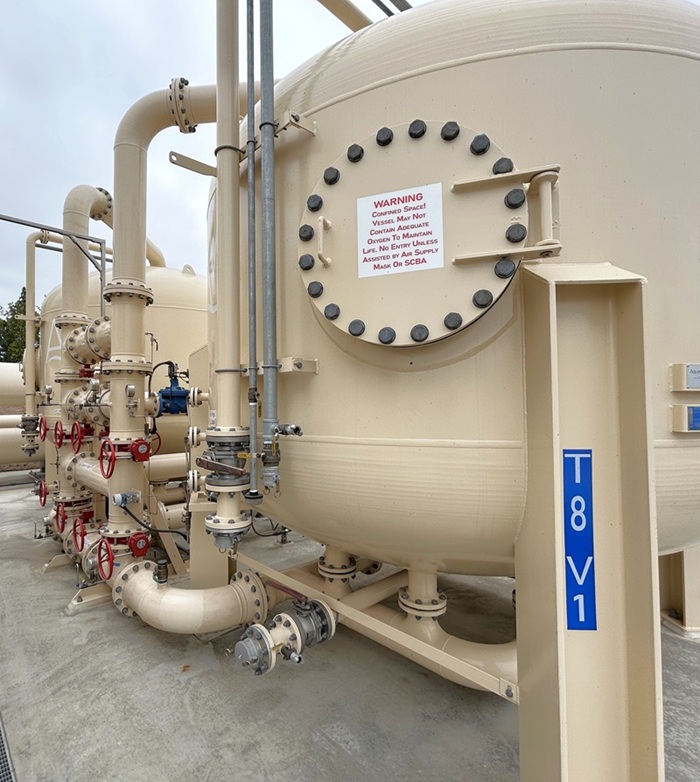
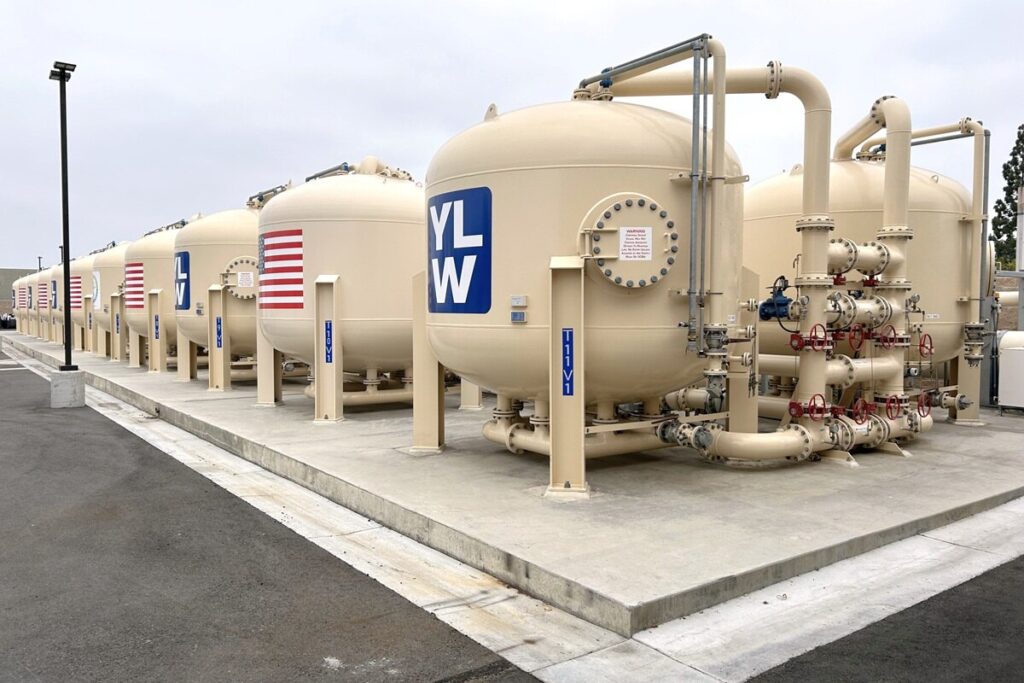
Removing PFAS from drinking water requires sophisticated treatment technologies that operate under precise conditions. The most common approaches, Granular Activated Carbon (GAC) and Ion Exchange (IX) systems, rely on physical and chemical processes that trap PFAS molecules as water passes through specialized media. These systems house activated carbon or resin beads inside large pressurized vessels, where contaminated water is forced through the filtration medium.
The effectiveness of these systems hinges on maintaining optimal operating conditions, particularly hydraulic loading rates and system pressure. Lower flow rates generally enhance PFAS removal efficiency and extend filter lifespan, while excessive flow rates can lead to premature filter exhaustion and contaminant breakthrough.
Advanced treatment methods like reverse osmosis and nanofiltration present greater challenges, requiring high-pressure vessels capable of withstanding significant stress. These systems need precise pressure control to function effectively while managing the concentrated waste streams they produce.
The Pressure Management Dilemma
Managing water pressure in PFAS treatment systems presents unique challenges that utilities need to navigate. The integration of new treatment technologies with existing infrastructure can create compatibility issues, as many municipal water systems weren’t originally designed to accommodate the pressure requirements of modern PFAS treatment equipment.

Retrofitting existing plants introduces potential pressure imbalances, increases leak risks, and can complicate system operations. For this reason, many PFAS stations are located downstream of treatment plants, just before the water enters the distribution network. In some cases, portable units can be installed in the same position in the distribution network
The energy demands of maintaining necessary water pressures also impact operational costs. This creates a challenging balance between effective treatment and financial sustainability, especially when considering the long-term nature of PFAS contamination.
PFAS treatment vessels are typically equipped with “burst plates” — safety devices designed to rupture when pressure exceeds safe limits. While burst plates are considered a relatively cheap option to prevent vessel damage, a burst plate failure requires immediate system shutdown and staff mobilization to the treatment site. For utilities serving thousands of customers, even brief treatment interruptions can have consequences.
The Solution: Intelligent Pressure Relief
The answer to effective pressure management lies in automated pressure relief systems that respond intelligently to changing conditions. Rather than relying on one-time-use burst plates, PFAS treatment systems benefit from sophisticated pressure relief valves that continuously monitor and adjust to maintain optimal operating conditions.
The Cla-Val 50-01 pressure relief valve is one example of a hydraulically operated, pilot-controlled valve that maintains constant upstream pressure within precise limits, automatically modulating open during high-pressure events to exhaust water and relieve dangerous pressure buildup. It closes automatically once the pressure event passes, resuming normal operation without manual intervention.
The valve’s modulating action provides smooth, precise control, maintaining continuous operation during pressure fluctuations, eliminating costly shutdowns and emergency repairs. It can also protect expensive treatment equipment while ensuring consistent water quality for consumers.
Implementation Considerations
Modern PFAS treatment installations typically incorporate one 3- or 4-in. pressure relief valve per treatment vessel, with larger electronic flow control applications requiring 6- to 16-in. valves for more complex systems. The sizing depends on system capacity, treatment technology, and specific site requirements.
For utilities using federal funding for PFAS treatment projects, compliance with American Iron and Steel (AIS) and Build America, Buy America (BABA) can present additional challenges. Finding a domestic production with reliable lead times (4 to 6 weeks) can factor in when facing regulatory deadlines.
More from Water Finance & Management on Build America, Buy America
The versatility of advanced pressure relief systems extends beyond basic pressure management. Depending on system design, filter manufacturers may incorporate air release valves, combination air valves, pressure reducing valves, and automatic flow control valves. Some installations feature highly customized stations that filter organics, inorganics and PFAS in integrated systems, requiring sophisticated control panels for two-way communication between valves and operators.
As PFAS treatment becomes standard practice across American water utilities, the lessons learned from early installations will guide future system design. The importance of proper pressure management cannot be overstated; it’s often the difference between a treatment system that operates reliably for years and one that fails within months.

Steve Causseaux is district sales manager for Cla-Val has almost two decades in water management. He works closely with water and wastewater district operators, engineers and independent engineering firms to select valves and specific valve functions for a wide range of applications.











Leave a Reply