| By Will Jernigan
You may encounter this very question embedded in your asset management program. How does the break history factor into prioritization of line replacement in your asset management matrix and capital planning? I submit the notion that we as an industry are due a paradigm shift on this front.
It’s important to consider two principles when it comes to leakage. First, not all leakage can be identified via acoustic leak detection, so it is necessary to understand your leakage ‘profile’ before investing in leak detection. This can be accomplished via a leakage component analysis, which is part of determining the most cost-effective leakage strategy. Second, it is a common misconception that the pipes with the most breaks are necessarily at the end of their asset life and warrant replacement. In most systems in North America, excess and transient pressure conditions in the pipe network are an underlying cause for premature breaks, and steps can be taken to optimize pressure conditions and extend asset life that are far less expensive than rehab or replacement. If your asset management plan utilizes break frequency as a criterion for pipe replacement, chances are you’re replacing assets too early and overspending in the long run.
Continue Reading
This archived story is available after you provide your email address and accept our Privacy Policy.

 The Next Phase of Digital Transformation for Water Utilities
September 28, 2026
The Next Phase of Digital Transformation for Water Utilities
September 28, 2026
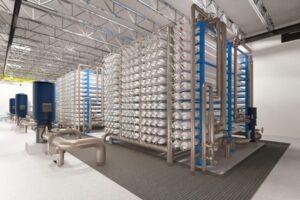 Beyond the MCL: Why Manufacturing Validation Determines Whether PFAS Treatment Actually Works at Scale
July 27, 2026
Beyond the MCL: Why Manufacturing Validation Determines Whether PFAS Treatment Actually Works at Scale
July 27, 2026
 Explaining the Decline in WIFIA Loan Volume: Part 2
December 8, 2025
Explaining the Decline in WIFIA Loan Volume: Part 2
December 8, 2025






| By Will Jernigan
I often get asked the question, “How do leaks inform the decision to repair or replace pipeline infrastructure?”
You may encounter this very question embedded in your asset management program. How does the break history factor into prioritization of line replacement in your asset management matrix and capital planning? I submit the notion that we as an industry are due a paradigm shift on this front.
It’s important to consider two principles when it comes to leakage. First, not all leakage can be identified via acoustic leak detection, so it is necessary to understand your leakage ‘profile’ before investing in leak detection. This can be accomplished via a leakage component analysis, which is part of determining the most cost-effective leakage strategy. Second, it is a common misconception that the pipes with the most breaks are necessarily at the end of their asset life and warrant replacement. In most systems in North America, excess and transient pressure conditions in the pipe network are an underlying cause for premature breaks, and steps can be taken to optimize pressure conditions and extend asset life that are far less expensive than rehab or replacement. If your asset management plan utilizes break frequency as a criterion for pipe replacement, chances are you’re replacing assets too early and overspending in the long run.
Continue Reading
This archived story is available after you provide your email address and accept our Privacy Policy.
Share this post