
Knowing How to Secure External Funding with Eastern Municipal Water District GM Joe Mouawad
As water affordability becomes increasingly important for customers, the ability to develop cost-effective infrastructure solutions to meet customer needs has never been more critical. The good news is, there are funding sources available that can help water agencies advance projects in a cost-effective way.
Eastern Municipal Water District (EMWD), based in Southern California, has helped create a roadmap for doing so. Over the past two decades, EMWD has secured more than $700 million in funding from federal, state and local agencies that have supported a broad range of infrastructure projects for water, wastewater and recycled water.
As California’s sixth-largest public water agency, EMWD is uniquely positioned to maximize these funding sources. It serves nearly 1 million customers and is located in one of California’s fastest-growing regions. EMWD’s service area is less than 50 percent developed based on land use agency General Plans. The result is that EMWD is investing $785 million in its five-year capital improvement plan to ensure infrastructure is in place to accommodate development activities across its 601-square mile service area.
But securing the $700 million in funding did not happen overnight. It has been a long-term strategic priority of its Board of Directors to return those tax dollars back to EMWD’s service area to benefit its customers. We talked with EMWD General Manager Joe Mouawad to learn about how EMWD has made external funding one of its core tenants of its Board-adopted Strategic Plan.
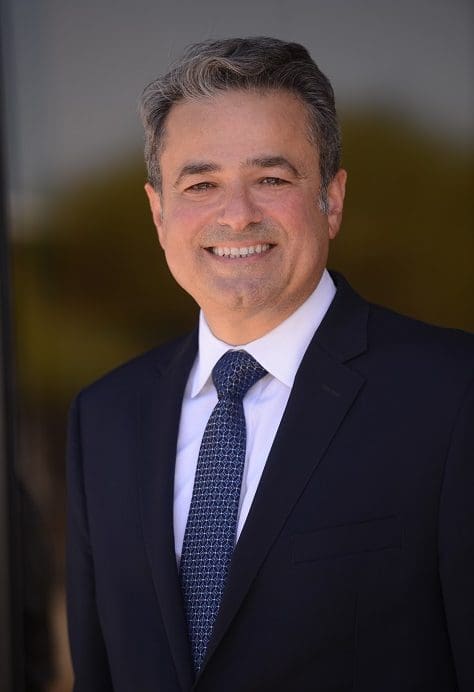
Mouawad has more than three decades of experience in the water industry. At EMWD, he oversees daily operations of the organization, which provides service to nearly one million people in western Riverside County and northern San Diego County, California.
Water Finance & Management: How do you view the importance of funding within your water agency’s strategic plan?
Joe Mouawad: First and foremost, these efforts are about our customers. EMWD wants to provide cost-effective water, wastewater and recycled water service to the communities we serve. Part of that commitment involves working to identify and secure appropriate funding opportunities that ultimately help minimize costs.
When our customers send their tax dollars to Washington, D.C., or Sacramento, we want to do everything we can to return those funds to their communities. Our grants and loans program accomplishes that and allows us to further invest in infrastructure needs without placing the full burden on our current or future ratepayers.
What we are most proud of is that we have been entrusted with these opportunities and our customers have benefited from them.
WF&M: What is your approach to successfully securing funding from external sources?
Mouawad: At the end of the day, our successes are the direct result of the relationships we build. We do not view this as a one-way street. We want to be partners with our legislative delegation and the funding agencies. The grants are a byproduct of that partnership.
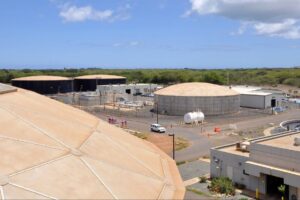
One of our longest partnerships is with the United States Bureau of Reclamation (USBR). In the 1990s, we pursued a partnership with USBR to develop a pilot treatment facility for secondary treated wastewater through our San Jacinto Wetlands facility. Subsequently, USBR began supporting additional EMWD projects and programs, including significant financial support for the backbone infrastructure of what is now our expansive recycled water system. Today, that recycled water system accounts for more than one-third of our water supply portfolio and it is in large part because of the partnership between EMWD and USBR.
But EMWD does not engage our partners only when there is funding available. We host routine briefings and tours with legislators and agency staff throughout the year as part of our commitment to continual education and trust-building.
Because of our long-term relationship building, we have seen a progression in the amount of funding we have received through earmark programs by our local legislators. These funds include federal tax dollars that are project-specific, and local support through county-driven allocations of American Rescue Plan Act funding to advance infrastructure projects that benefit the communities we mutually serve.
For other agencies who may want to establish a similar program, it is important to have short and long-term goals. A small grant now can lead to long-term mutually beneficial partnerships for future generations.
Start with identifying smaller grant opportunities and show that your organization can be trusted to put those funds toward beneficial use. From there, the process continues and your relationships with funding partners and legislators will grow, as will the results that your organization will see from the investments in people and partnerships.
WF&M: What types of projects is EMWD currently funding with federal money?
Mouawad: In recent years, USBR and its parent organization, the United States Department of the Interior, have provided $27.5 million for our Purified Water Replenishment program, including $10 million from the Bipartisan Infrastructure Law. In August 2023, Secretary of the Interior Deb Haaland visited EMWD to tour the site of our future Purified Water Replenishment facility.
EMWD has had similar successes for its groundwater desalination program, which has received in-kind facility construction resources from the Army Corps of Engineers and $22.5 million in grant funding from the State Water Resources Control Board for the construction of the Perris II Desalter. To date, EMWD has received $50 million in funding authorizations from the Water Resources Development Act from the Army Corps of Engineers and is actively working toward another $50 million authorization.
We are continuing to advocate for additional funding that will advance programs in our region, which is in one of the fastest growing areas in California according to the most recent census.
WF&M: How important is accountability throughout the process of obtaining federal funds?
Mouawad: Accountability is everything and goes back to the relationship-building and mutual trust that we spoke of earlier.
By demonstrating to our funding partners that we are strong financial stewards of public funds, able to maintain compliance with the funding agreement terms and conditions, and are working to be accountable to our ratepayers by reducing infrastructure costs, we are entrusted to maximize the opportunities that are available.
WF&M: What are some of the hurdles you face in applying for/getting approval for federal funds?
Mouawad: Two challenges come to mind when it comes to external funding.
The first is changing priorities. Since long-term foresight is key to identifying needs, it also creates extra time for federal funding priorities to shift. At some point, federal priorities may no longer align with your local priorities. That is why communication is important, as is the ability to adapt to a changing environment.
The other challenge is regulatory requirements that can evolve. Infrastructure projects do not happen overnight, and neither does funding. These efforts can sometimes take many years, and during that time, new regulations or administrative requirements may be enacted.
By remaining engaged with regulatory agencies – which are often the same entities as funding agencies – you can identify potential concerns early and have input during the process and find shared solutions to these challenges.
WF&M: Is there other advice you could provide agencies in this process?
Mouawad: We are fortunate that our Board of Directors has provided EMWD with the resources to be successful in this arena. That is vitally important and cannot be understated. We have dedicated grants and loans and legislative advocacy teams whose work in these areas has been incredible.
For other agencies, understand that starting small is a steppingstone to larger opportunities. By being successful with a smaller grant, you may open the door to growing those relationships and larger grant opportunities. But the most important piece of advice is to never forget that these efforts are all about maximizing value for your ratepayers.


Leave a Reply