

By Shaun Pietig
WaterOne is the largest water utility in Kansas, serving more than 475,000 customers across 17 cities and unincorporated areas in Johnson County. Since our founding in 1957, we’ve grown from a modest operation supplying 5 million gallons per day to a robust utility with a capacity of 200 million gallons per day. This growth has been guided by our Master Plan — a comprehensive roadmap for expansion, sustainability and infrastructure investment. Our infrastructure includes three treatment facilities, two river sources, nine pump stations and more than 2,800 miles of pipe. We operate with a clear mission: to provide safe, reliable high-quality drinking water to our community with exceptional service and value. But reliability isn’t just about capacity — it’s about the integrity of the system beneath our feet.
Pipe Material Shift: A Strategic Pivot
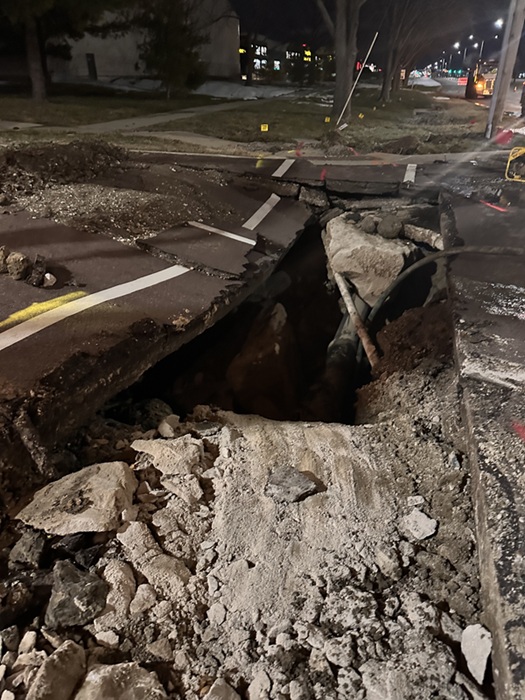
Prior to 2008, WaterOne installed ductile iron pipe (DIP) exclusively for distribution mains and predominantly for transmission mains. Our crews appreciated DIP for its strength, durability, and flexibility. We used polywrap and sacrificial anode cathodic protection to mitigate corrosion, but over time, field data revealed a troubling trend: premature corrosion in our highly corrosive soils, even with protective measures in place.
In 2008, our engineering department conducted a comprehensive analysis of pipe performance. The findings were clear. PVC pipe offered a longer expected service life — over 100 years — even in our soil conditions. It was lighter, easier to install and more cost-effective. Importantly, it had the same outside diameter as DIP, allowing for compatibility with existing fittings and infrastructure.
Despite initial resistance from our crews — many of whom had experienced failures with older, poorly installed PVC in a merged rural district — our crews conducted rigorous field tests at our facility. We hit PVC pipe with backhoe buckets, dropped it, pulled it with locking joints, and performed crush tests. It passed every test. Slowly, our crews began installing PVC for distribution mains smaller than 20 in. in diameter, and we continued educating our crews on proper installation techniques.
Installation Growth and Performance Metrics
WaterOne’s internal data from 2018 to 2024 shows PVC C900 consistently has the lowest break rate among materials, ranging from 3.1 to 8.2 breaks per 100 miles per year. Cast iron, ductile iron, and pre-2008 PVC had significantly higher rates, reinforcing the reliability of modern PVC.
After the on-site field testing confirmed PVC’s durability, the additional benefits included no corrosion, reduced reliance on heavy equipment, safer cutting of the pipe, better flow characteristics, and compatibility with horizontal directional drilling (HDD) and pipe bursting installation methods. PVC also has a higher C-factor in hydraulic modeling and lower embodied energy in manufacturing.
From 2008 to 2024, our use of PVC pipe steadily increased. In 2008, we installed 7.98 miles of PVC, representing 20.5% of our total installations that year. By 2024, that number had grown to 29.44 miles, accounting for 84.1% of our installations. In total, we’ve installed more than 560 miles of PVC pipe under 20 in. For larger diameters (20 to 30 in.), adoption was slower but has gained momentum. In 2022, 85.6% of pipe installed in this range was PVC. These numbers reflect a deliberate, data-driven shift toward a material that performs better in our soil environment.
Performance Improvements
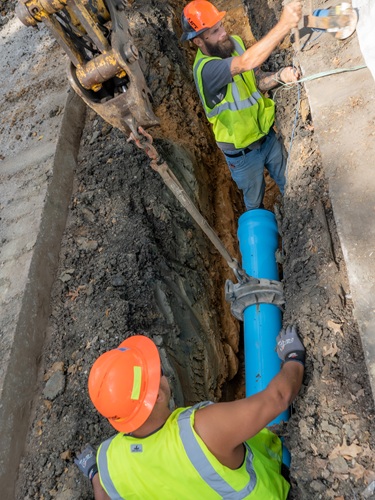
The transition to PVC has yielded measurable performance improvements across WaterOne’s system:
- No Corrosion: PVC’s immunity to corrosion has eliminated the need for polywrap and cathodic protection, reducing long-term maintenance and material costs.
- Lower Labor Hours and Injury Rates: PVC is lighter and easier to handle, reducing the need for boom trucks and heavy equipment. It’s also safer to cut, with no kickback from saws, leading to fewer crew injuries.
- Better Flow Characteristics: PVC’s smooth interior walls resist buildup, maintaining optimal flow rates over time and improving water quality.
- Unified Material Usage: restrained gasketed PVC joint systems allow for seamless integration with HDD and pipe bursting, streamlining new installation and replacement projects.
- Higher C-Factor in Hydraulic Modeling: PVC’s flow characteristics contribute to more accurate and efficient hydraulic modeling, enhancing system planning and performance.
Break Rate Data: A National Perspective
WaterOne’s experience aligns closely with the findings of the 2023 Utah State University (USU) study Water Main Break Rates in the USA and Canada, which analyzed data from over 800 utilities covering nearly 400,000 miles of pipe. The study found that the average break rate across all pipe materials was 11.1 breaks per 100 miles per year — a 20% decrease from a similar USU Water Main Break study in 2018. PVC consistently reported the lowest break rate among all materials. At WaterOne, our internal data confirms this trend.
Since adopting PVC, our break rates have remained significantly lower than those for cast iron and DIP. Most PVC breaks have been attributed to improper installation — such as bending the pipe or poor bedding — not material failure. This underscores the importance of crew education and proper installation practices.
Corrosion and Material Selection
WaterOne crews recommend using heat for the gaskets in cold temperatures, lifting the bell end slightly when belling the pipe, wrapping tracer wire at each end of the pipe segment, and tracing the project post-installation. Proper service saddles, glands, and bedding are essential. PVC should never be bent or deflected at joints — fittings must be used.
Challenges include difficulty tracing PVC alignment without tracer wire, complex leak detection and continued use of DI fittings requiring polywrap. Improper installation — such as bending pipe or poor bedding — remains a leading cause of failures.
One of the most compelling findings from the USU study is the impact of soil corrosiveness on pipe performance. Ductile iron pipe in highly corrosive soil has a break rate six times higher than in low corrosive soil. This aligns with our own experience in Johnson County, where corrosive soils accelerated DIP failure despite protective measures. PVC’s immunity to corrosion makes it an ideal choice in our soil environment. It eliminates the need for polywrap and cathodic protection, simplifying installation and reducing long-term maintenance costs. The study also found that material selection varies significantly by region, often based on historical preference rather than performance data. WaterOne’s decision to switch to PVC was based on performance, not tradition — hopefully our experience will help other utilities with corrosion issues.
Lessons Learned and Opportunities Ahead
WaterOne’s journey with PVC pipe has not been without challenges. Tracing PVC alignment is difficult without tracer wire and locating devices. Leak detection is more complex. While we’ve reduced our use of polywrap, DI fittings still require it. Improper installation remains a concern, particularly when crews attempt to bend PVC to gain deflection. To address these issues, we’ve implemented best practices and shared tips with our crews. We use heat to soften gaskets, lift the bell end during installation, wrap tracer wire at each end, and trace projects post-installation. We emphasize the use of proper bedding, service saddles, and glands. Most importantly, we reinforce that PVC should never be bent or deflected at joints — fittings must be used.
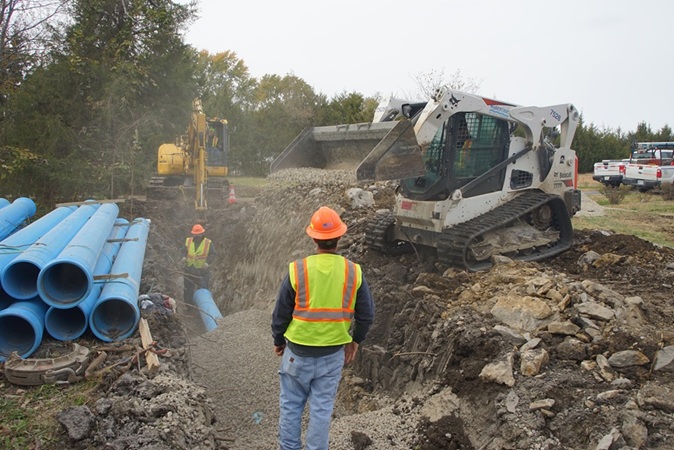
Installation Best Practices for PVC Pipe
1. Proper Bedding and Backfill
- Use clean, granular material for bedding and backfill.
- Avoid large rocks or debris that could damage the pipe.
- Ensure uniform support along the pipe barrel.
2. Avoid Bending or Deflection
- Never bend PVC pipe or deflect joints to achieve alignment.
- Use appropriate fittings for changes in direction.
- Plan restraint lengths and joint locations carefully.
3. Joint Assembly Techniques
- Use heat to soften gaskets in cold weather for easier assembly.
- Lift the bell end slightly during installation to prevent over-belling.
- Ensure the pipe is fully inserted to the reference mark (double line on pipe).
4. Tracer Wire and Locating
- Wrap tracer wire at each end of the pipe.
- Use locating devices or terminals to trace alignment post-installation.
- This is essential for future locating, leak detection, and maintenance.
5. Service Connections
- Use proper service saddles and glands designed for PVC.
- Avoid tapping directly into the pipe without approved fittings.
6. Hydraulic Considerations
- PVC has a higher C-factor (typically 150), improving flow efficiency.
- Ensure hydraulic modeling reflects this for accurate system planning.
7. Compatibility with Trenchless Methods
- Use restrained gasketed PVC joint systems for HDD and pipe bursting.
- Confirm compatibility with equipment and soil conditions.
8. Crew Training and Oversight
- Educate crews on differences between PVC and metallic pipe handling.
- Emphasize safety benefits: lighter weight, easier cutting—no saw kickback.
- Monitor installations to prevent common errors like poor bedding, bending/deflecting the pipe, or over-belling.
A Model for Resilient Infrastructure
WaterOne’s transition to PVC pipe is a testament to the power of data-driven decision-making, cross-departmental collaboration and long-term planning. Our experience validates the findings of the 2023 USU study and demonstrates how utilities can proactively improve infrastructure performance and reliability. As the nation faces a $452 billion funding shortfall for water main replacement, utilities must make informed choices about materials and practices. PVC pipe offers a safe, durable, and cost-effective solution. It’s not just a pipe—it’s a pathway to resilience.
At WaterOne, we believe in the meaningful work of producing safe, reliable, high-quality water. By investing in the right materials and practices, we’re building a system that will serve our community for generations to come.
Shaun Pietig, P.E., is General Manager of WaterOne, serving Johnson County, Kansas. She is responsible for the daily administration of WaterOne’s operations, personnel and financial affairs. Pietig joined WaterOne in 2007 as a project engineer with previous experience as a design engineer and project manager at an engineering consulting firm. She has served in numerous technical and leadership roles at WaterOne including project engineer, infrastructure planner and asset manager, lead engineer and more.







Leave a Reply