
A project team has been awarded a $150,000 research grant from the Water Research Foundation (WRF) to develop and test new artificial intelligence (AI) tools designed to enhance operations at water resource recovery facilities.
The team includes engineering firm Stantec, WSSC Water and Prince William Water, along with EAOS, a firm that specializes in AI tools for wastewater operations. A press release noted the research team’s goal will be to develop AI tools that turn plant data into clear, easy-to-use information for operators.
The project will be piloted at WSSC Water’s Piscataway WRRF in Accokeek, Maryland, where the technology will help forecast treatment impacts and identify opportunities to optimize operations through reduced energy and chemical use.
The team said the research will be focused on addressing growing operational challenges, including:
- Stricter environmental regulations to protect local waterways.
- Rising energy and chemical costs.
- Complex treatment processes requiring real-time decision-making.
- Numerous data systems that do not always work together.
- Training and support for the next generation of plant operators.
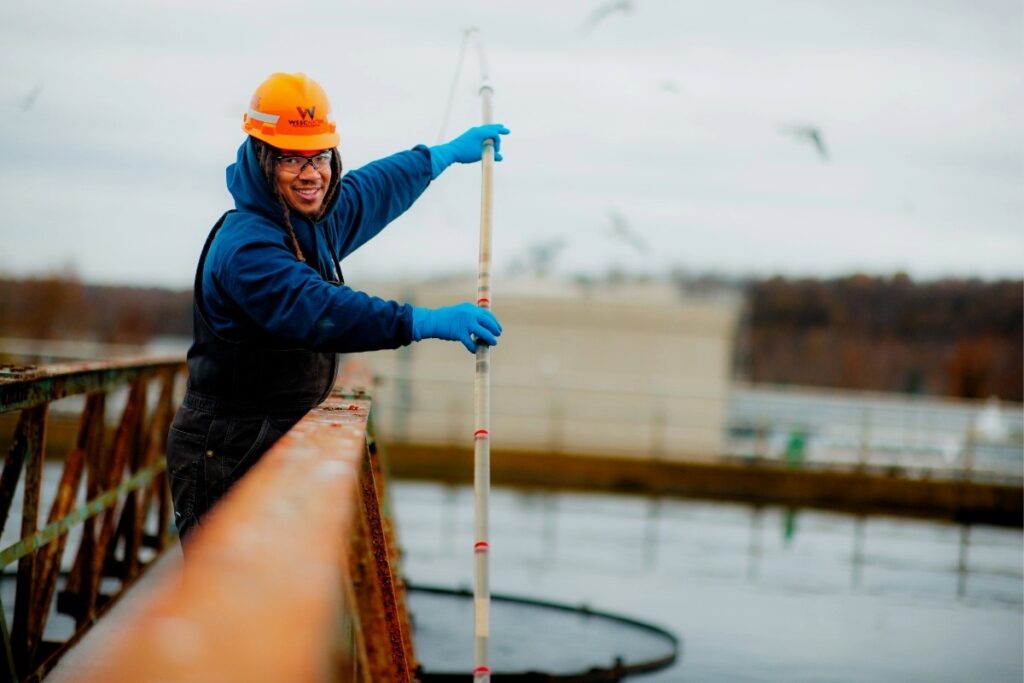
Stantec said the team will incorporate learnings at WSSC Water’s Piscataway Water Resource Recovery Facility, and Prince William Water’s H.L. Mooney Advanced Water Reclamation Facility. Additional observer utilities from across the United States will be invited to participate throughout the project, helping insights and outcomes to be broadly replicated and implemented.
“As the next generation enters the water workforce and become operators of these increasingly complex treatment facilities, they need tools that turn data into actionable insight,” said Dr. Caroline Nguyen, WSSC Water Program Manager of Innovation. “This project allows us to test practical AI solutions that support operators, improve efficiency, and strengthen environmental protection, starting with real-world applications at our Piscataway WRRF.”
“At its core, this project is about practical innovation grounded in operations,” said Pusker Regmi, Stantec vice president and principal investigator. “By bringing together engineering, plant experience, and artificial intelligence, we’re creating tools that operators can trust to manage increasingly complex facilities.”
WSSC Water is contributing $75,000 to support the effort and will help pilot and apply the technology at its facilities.
Stantec will lead development of the AI system, combining engineering expertise with advanced data analytics. The company will also incorporate AI technology from EAOS.
The two and half year initiative will focus on creating practical tools that plant operators can use in their day-to-day work while ensuring participating utilities maintain ownership of their data.
This project is part of WRF’s Tailored Collaboration Program which supports utility-led research projects that address real-world operational needs. Additional Mid-Atlantic utilities that will benefit from the research include AlexRenew, Arlington County, Hampton Roads Sanitation District, DC Water, Loudoun Water, and Charlotte Water.
WSSC Water said the results will include an operational pilot, a research report, and a practical implementation guide designed to help utilities understand how AI can be used to support treatment plant operations.
Sources: WSSC Water, Stantec






Leave a Reply