

According to a recent report from global water market data and insights provider Bluefield Research, nearly one in five gallons — 19.5% — of treated drinking water in the United States is lost before it reaches customers or is improperly billed. Known as non-revenue water (NRW), Bluefield estimates that it costs utilities more than $6.4 billion (USD) in uncaptured revenues annually.
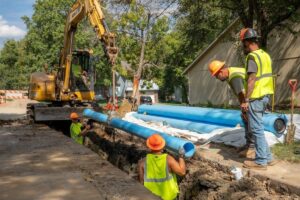
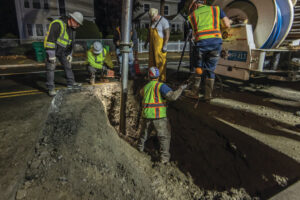
According to Bluefield, a major contributor to water loss is vast and aging distribution networks that span more than 2.2 million miles across the country. Water main breaks are estimated to occur every two minutes, placing significant financial, operational and infrastructure burdens on utilities and their stakeholders. Along with physical water loss, utilities also need to be concerned about under-registering meters that may improperly bill customers for their water usage, resulting in lost revenue for the utility. The total value of the water lost from physical leakage and water that goes unbilled, is non-revenue water.
“Non-revenue water is a significant and often overlooked challenge in municipal water management, and in many respects, core infrastructure delivering drinking water is approaching the end of its useful life,” said Megan Bondar, analyst at Bluefield Research. “Our analysis shows that the vast majority — about 87% — of total water loss stems from real losses, such as leaks and pipe bursts. Apparent losses, such as metering inaccuracies, data errors, and unbilled authorized consumption like firefighting, make up a much smaller share.”
On average, small and very small utilities report water losses above 20% of total supply, according to Bluefield. “With limited financial resources, technical expertise, and staffing, smaller utility systems face steep challenges in leak detection, asset management, and system upgrades,” said Bondar. In contrast, larger utilities report average losses of 16.7%, underscoring the advantages of scale and access to more advanced monitoring technologies. This disparity highlights the need for targeted investment and tailored solutions for under-resourced communities facing aging infrastructure and capital limitations.

U.S. water systems collectively lose approximately 6.75 billion gallons of treated drinking water daily. Just five states — California, Texas, Florida, New York, and Illinois — account for more than one-third of national losses, collectively exceeding 2.44 billion gallons daily, or roughly $6.3 million in uncaptured revenue. Loss rates vary widely across the country, influenced by pipe age, material type, weather exposure, and system density. The South accounts for 37.2% of total national losses, driven by the scale of water networks in states like Texas and Florida.
“Despite rising operational and financial risks, the U.S. still lacks a cohesive national policy framework to address NRW across nearly 48,000 community drinking water systems,” explained Bondar. “While states such as California, Georgia, Indiana, and Texas are taking steps to standardize reporting and validation requirements, many utilities still lack accurate, validated data — hindering transparency, performance benchmarking, and corrective action.”
A perfect storm of supply disruptions, aging infrastructure, and digital innovation is pushing utilities to rethink how they manage water loss, Bluefield said. Technologies — advanced metering infrastructure, satellite leak detection, acoustic sensors, and smart customer engagement platforms — are moving from pilot initiatives to core strategies for identifying and mitigating real losses. However, traditional, field-based methods, such as pipe replacements, routine inspections, and boots-on-the-ground monitoring, still remain essential to keeping systems operational and resilient.
“Some communities even rely on trained dogs to detect leaks,” Bondar adds. “This underscores how local and varied the solutions to water loss can be. Tailored approaches are needed to reflect each utility’s specific financial and operational constraints.”
About Bluefield Research
Bluefield Research supports strategic decision makers with actionable water market intelligence and data across the global industrial and municipal sectors. The complete insight report analyzes more than 2,400 utility water loss audits across 11 U.S. states to quantify the scale and cost of non-revenue water.






I’m served by a relatively small rural water district. We noticed a leak on the utility side of our meter, enough of a leak to cause potholes in the road. We reported the leak 4 times over a 3 month period before they even came out to look at it. 2 more weeks before they came out to fix it. Fixing leaks doesn’t seem to be a priority for some water districts.