

By Anna Gagliardo & Kevin Weeks
The Tarrant Regional Water District (TRWD) manages one of North America’s most extensive Prestressed Concrete Cylinder Pipe (PCCP) networks, spanning 260 miles and supplying over two million residents across 11 counties with pipe mains ranging from 72 in. to 108 in. in diameter.
Historically, pipeline failures resulted from wire corrosion and hydrogen embrittlement, leading to costly emergency repairs and service disruptions. Given the aging infrastructure, particularly segments constructed in the 1970s, TRWD recognized the need to transition from reactive maintenance to a predictive, data-driven approach. This piece presents an advanced inspection methodology that enhances risk assessment, optimizes resource allocation, and significantly reduces capital expenditures while fortifying long-term infrastructure resilience.
Understanding PCCP Integrity and Failure Mechanisms
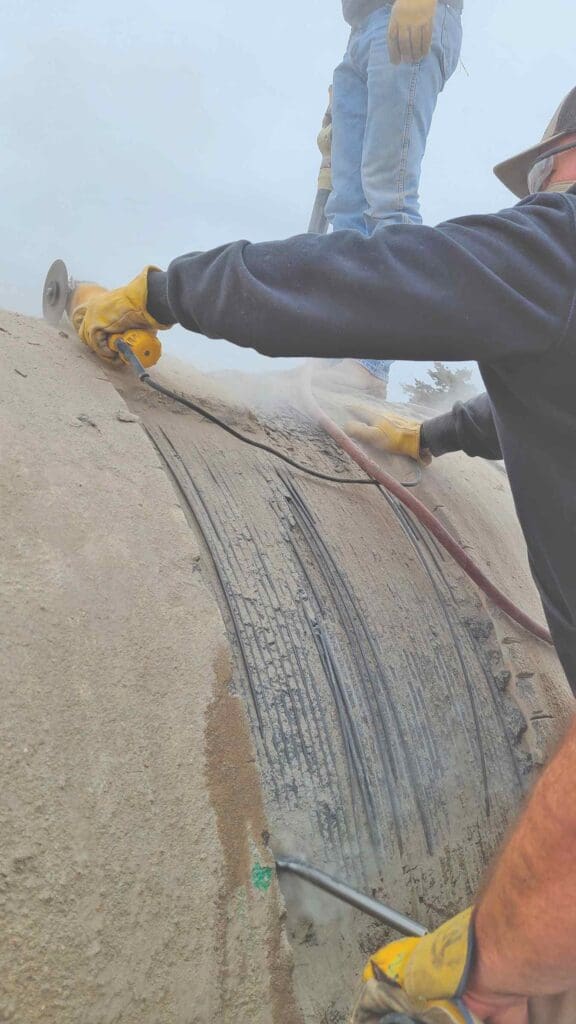
PCCP is composed of a reinforced concrete core, a steel cylinder for water containment, prestressing wires to provide structural reinforcement, and an external mortar coating for protection. The primary failure modes in PCCP infrastructure include wire corrosion leading to tensile strength degradation, hydrogen embrittlement causing abrupt wire fractures, environmental conditions accelerating material deterioration, and structural stressors such as soil movement or excessive external loads. As these vulnerabilities accumulate over time, early detection becomes essential to mitigate the risk of catastrophic failure and ensure service continuity.
Key Indicators of PCCP Deterioration
The identification and quantification of failure indicators are critical to prioritizing maintenance investments. Among the most consequential indicators, wire break detection remains paramount. Electromagnetic (EM) inspection technology enables utilities to assess the extent and concentration of wire breaks, guiding intervention strategies based on established risk thresholds. While minor wire loss may not immediately compromise pipeline function, exceeding critical thresholds exponentially increases failure risk.
Acoustic monitoring serves as an early-warning system, providing real-time insights into structural distress. Hydrophone and acoustic fiber optic (AFO) systems capture wire break events and leak formations, enabling operators to correlate these signals with EM inspection results. This integration enhances predictive accuracy, allowing utilities to proactively address emerging vulnerabilities before they escalate into full-scale failures.
Environmental and geotechnical conditions further influence pipeline longevity. Corrosive soil compositions accelerate degradation, while dynamic ground movement—whether from seismic activity, settlement, or heavy surface loads—imposes additional structural stresses. A comprehensive understanding of these external factors informs strategic mitigation measures, reinforcing the integrity of critical infrastructure assets.

Implementing Remote Field Technology for Proactive Asset Management
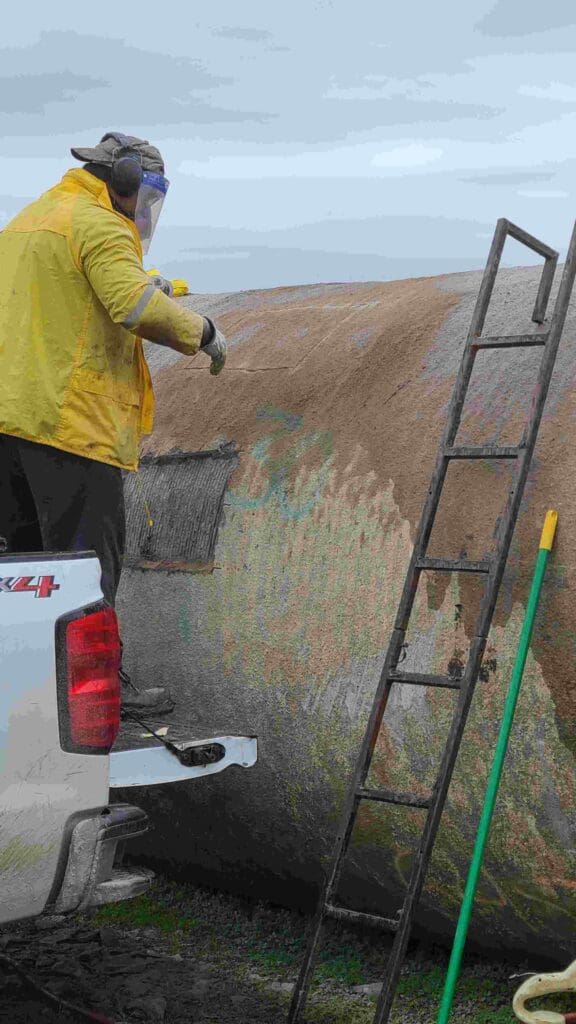
In alignment with its commitment to proactive infrastructure management, TRWD collaborated with Pipeline Inspection and Condition Analysis (PICA) Corp. to deploy Remote Field Technology (RFT), a non-invasive assessment method utilizing low-frequency electromagnetic fields to detect subsurface anomalies. RFT provides a sophisticated means of identifying wire breaks, preload loss, and reductions in wall thickness — key indicators of impending structural failure.
The inspection initiative encompassed both controlled testbed environments and in-situ assessments of operational pipelines. At the Ennis Pump Station, controlled conditions allowed for targeted evaluations of PCCP integrity, while field inspections near Midlothian and Mansfield were conducted based on historical performance data and known distress indicators.
RFT data acquisition relied on an exciter-generated low-frequency electromagnetic field interacting with the pipeline’s ferrous components. Detectors positioned at strategic intervals captured variations in conductivity, magnetic permeability, and structural integrity. This methodology was augmented by complementary diagnostic tools, including closed-circuit television (CCTV) for internal visual assessments, light detection and ranging (LiDAR) for geometric distortion mapping, and strain gauges for stress analysis. The integration of these technologies enabled a granular, multidimensional evaluation of pipeline conditions, allowing TRWD to implement targeted maintenance interventions before structural deficiencies reached a critical threshold.
Large Diameter Concrete Water Main Failures
Risk-Based Prioritization Model for Infrastructure Investment
Leveraging the insights derived from RFT assessments, a tiered prioritization model was developed to inform capital planning and optimize maintenance expenditures. The model categorizes pipeline conditions based on varying degrees of structural compromise:
- Changes in conductivity due to wire breaks without preload loss signal the early onset of hydrogen embrittlement, warranting ongoing monitoring and reevaluation.
- Conductivity fluctuations accompanied by preload loss, absent significant wall thickness reduction, indicate progressive wire breakage from corrosion, necessitating scheduled remediation.
- Advanced deterioration, characterized by conductivity shifts, preload loss, and wall thinning, denotes severe structural degradation with potential cylinder corrosion, requiring immediate intervention or reinforcement.
This risk-based approach ensures that financial and operational resources are allocated according to the severity of pipeline distress, thereby preventing unnecessary expenditures while safeguarding critical water distribution infrastructure. By refining maintenance strategies through predictive analytics, utilities can transition from reactive spending to strategically planned investment cycles, improving cost-efficiency and long-term sustainability.
Financial Implications and Cost-Reduction Strategies
The adoption of RFT and the prioritization framework has yielded substantial financial benefits for TRWD. By identifying vulnerabilities at an early stage, the district has minimized the need for emergency repairs and unscheduled interventions, resulting in significant cost savings. Instead of full pipeline replacements, TRWD now replaces only 15 to 20 pipes per year based on risk assessment. Replacing a single 24-ft, 72-in. pipe costs up to $50,000, whereas a full 10-mile pipeline replacement could cost up to $80 million — illustrating the massive savings from their targeted approach. Proactive assessments have enabled TRWD to extend the operational lifespan of aging infrastructure by decades, delaying what would have been hundreds of millions of dollars in replacement costs while maintaining service reliability.
By identifying vulnerabilities at an early stage, the district has minimized the need for emergency repairs and unscheduled interventions, resulting in significant cost savings. Instead of full pipeline replacements, TRWD now replaces only 15 to 20 pipes per year based on risk assessment.
The predictive model has further optimized resource allocation by directing funds toward the most critical at-risk segments rather than deploying broad, indiscriminate maintenance programs. This targeted approach not only reduces overall capital expenditures but also enhances budget forecasting accuracy, supporting fiscally responsible infrastructure planning.
Moreover, mitigating pipeline failures has a direct economic impact beyond maintenance costs. Avoiding sudden service disruptions prevents secondary financial losses associated with emergency response mobilization, regulatory penalties, and customer service interruptions. In a sector where infrastructure reliability is paramount, the ability to anticipate and prevent failures delivers tangible financial and operational advantages.
Strategic Implications for Water Utilities
The successful implementation of RFT underscores the transformative potential of advanced diagnostic technologies in water infrastructure management. The insights gained from predictive analytics enable utilities to transition from reactive maintenance models to forward-looking asset management strategies, reducing operational uncertainties and enhancing system resilience.
For utilities overseeing extensive pipeline networks, the adoption of similar methodologies can yield substantial long-term dividends. The ability to correlate structural, acoustic, and environmental data facilitates more precise intervention planning, improving the efficiency of capital investments. Furthermore, by mitigating the risks associated with aging infrastructure, utilities can reinforce public confidence in water service reliability while optimizing financial stewardship.
Future Developments and Continuous Innovation
As TRWD continues to refine its predictive modeling capabilities, future research will focus on enhancing calibration methodologies and expanding datasets to encompass a broader spectrum of pipeline conditions. Emerging advancements in preload restoration techniques and sensor-based monitoring solutions hold the potential to further elevate pipeline integrity assessment accuracy.
Through sustained innovation and strategic partnerships, TRWD remains committed to achieving zero pipeline failures while enhancing operational efficiency. The integration of cutting-edge technologies—including RFT, acoustic monitoring, and environmental risk assessments—represents a pivotal step toward a smarter, more resilient water distribution infrastructure.
By embracing proactive asset management principles and leveraging state-of-the-art inspection methodologies, TRWD establishes a benchmark for utility operators nationwide. This forward-thinking approach ensures the continued sustainability of critical pipeline networks while delivering measurable financial and operational efficiencies, ultimately safeguarding water resources for future generations.

Anna Gagliardo is marketing manager at PICA Corp., where she manages content creation, social media, conferences and webinars to strengthen brand presence to align with PICA’s core values of integrity, collaboration and continuous improvement in proactive pipeline assessment.

Kevin Weeks is vice president of sales and marketing at PICA Corp. He has more than a decade of experience in business development, operations management and customer success. His expertise working in water and wastewater encompasses areas such as technology, business strategy, financial analysis, client retention and team leadership.










Leave a Reply