

Water Finance & Management recently caught up with Matt Reaves, President of Pipe Operations at Garney Construction, to chat about a few frequently discussed topics in the industry – from the contractor point-of-view. As one of the largest contractors for water projects in the United States, Reaves gave us some quick thoughts on the importance of evolving with clients’ needs, project bundling and PFAS.
WF&M: Are more public utilities opting to handle construction work in-house to avoid contractor requirements? Is this something you’re seeing in Garney’s work?
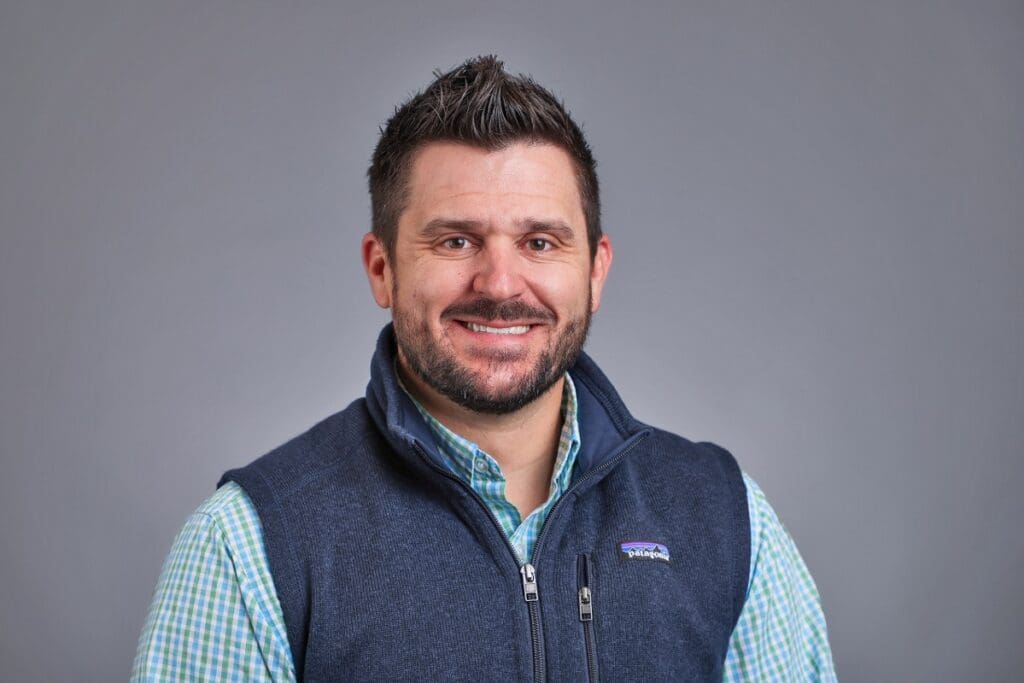
Reaves: At Garney, we’re not seeing a shift away from contracting. Some utilities have in-house teams that handle routine maintenance, but larger capital projects still tend to be contracted out. The complexity, permitting, and resource needs for large-scale water infrastructure typically exceed what can be supported internally.
That said, many of the municipalities we work with have ongoing service contracts that allow them to bring us in quickly when additional work or support is needed. Because we stay involved and understand the systems we’ve built, we’re able to step in and support our clients as their needs evolve.
WF&M: Are more owners bundling multiple projects into a single contract? What are the advantages for the owner and for you as the contractor?
Reaves: We see owners consider bundling multiple scopes into a single contract when it makes sense for the project. This approach can simplify delivery and improve overall coordination. As a self-performing contractor with expertise across multiple areas of work — and the financial strength to support large, packaged scopes — we’re well-positioned to manage complex projects from planning through completion. Fewer contracts and touchpoints can reduce the lift on internal teams, help keep schedules aligned and create a more seamless process.
Whether scopes are bundled or separated, we work within the structure provided and stay in step with our clients to deliver efficiently and reliably.
WF&M: In water/wastewater treatment plant construction, are your projects geared more toward new construction or upgrading existing plants?
Reaves: Garney supports both new construction and upgrades for water and wastewater treatment plants. What makes the most sense often comes down to the age of the existing infrastructure and the utility’s long-term goals. Facilities built in the 1950s or ’60s can be more challenging to retrofit due to outdated layouts and limited capacity, making new or parallel facilities the more practical option. Plants from the 1990s or 2000s are typically better suited for upgrades, since many were designed with future expansion in mind.
We’ve seen a growing number of greenfield projects in recent years, especially in fast-growing regions and areas embracing regionalization. These new facilities allow multiple aging plants to be consolidated into a single, more efficient system — one that’s designed to scale and meet evolving needs.
Whether it’s a retrofit, expansion, or brand-new facility, these decisions are shaped by long-term operational goals and the changing needs of their communities.
WF&M: We hear a lot about PFAS in the water sector and the financial strain that regulations may have on water systems. But from the contractor perspective, are a lot of these projects related to PFAS treatment — either new plant construction or upgrades — indeed on the rise?
Reaves: Yes, PFAS treatment projects are already underway and continue to grow. We’ve been involved in this work since well before the latest regulations. We’ve seen a noticeable uptick recently, particularly in places like Colorado, where Garney has several projects in progress.
The scope of these projects varies. Some are standalone treatment systems, while others are integrated into existing facilities — it all depends on the utility’s goals and infrastructure needs or requirements. Much of the current work involves familiar technologies like granular activated carbon (GAC) and pressure filtration. While these technologies are now commonly used for PFAS mitigation, we’ve been installing them for years as part of other treatment systems. Our experience with those systems made PFAS-focused projects a natural extension of the work we were already doing.
We’re also seeing some clients explore newer approaches, like supercritical water oxidation, as they plan for the future.







Leave a Reply