

Garney announced it has broken ground on Phase 1 of the City of Savannah, Georgia’s Infrastructure & Domestic Water Treatment Plant Improvements, a project to boost the facility’s treatment capacity.
Garney said the project is a major investment in the city’s long-term water infrastructure and will be delivered via a Construction Manager at Risk (CMAR) method, a first for a Savannah water project. Once complete, Phase 1 will increase the plant’s treatment capacity from 58 million gallons per day (MGD) to 65 MGD.
“Investments like this ensure Savannah residents and businesses continue to receive safe, high-quality drinking water as our community grows,” said Ronald Feldner, Chief of Water Resources at the City of Savannah. “This project reflects the city’s commitment to long-term water system reliability and responsible stewardship of our region’s water resources and critical public infrastructure.”
Originally built in 1947, the water treatment plant plays a critical role in serving the region. Phase 1 improvements are designed to increase capacity, reduce maintenance demands, and enhance water quality and operational reliability.
The Phase 1 scope of work will include improvements to chemical feed systems, replacement of aging sludge collection equipment and modifications to filter effluent systems to improve treatment efficiency and consistency. The project also includes the construction of a new 3-million-gallon prestressed concrete tank to increase head pressure on existing pumps, enabling greater effluent pumping capacity.
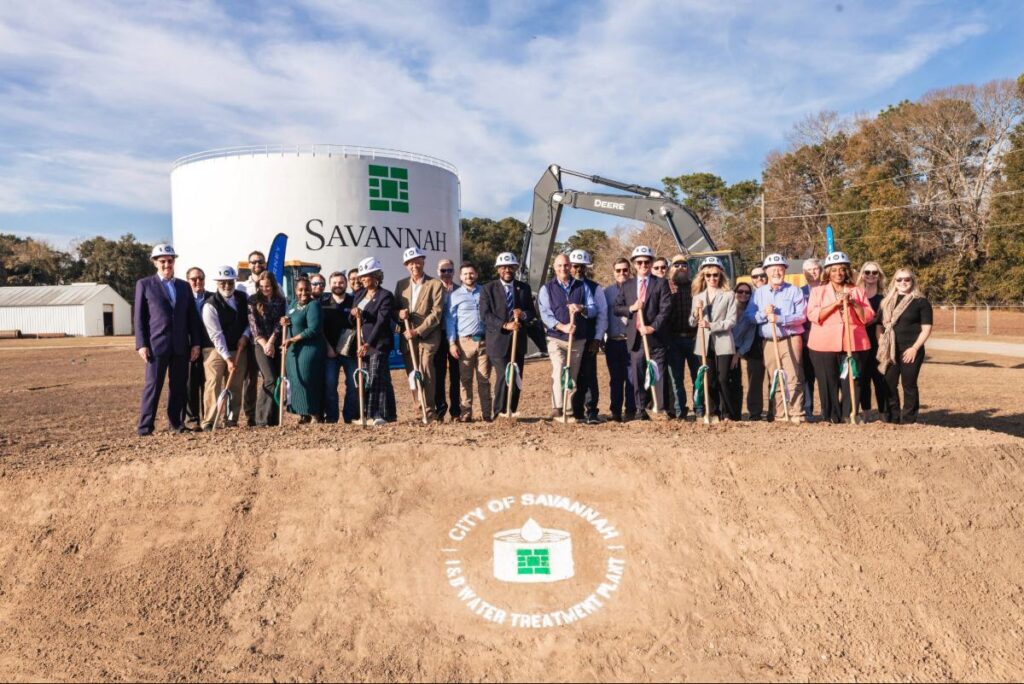
Garney said it is working closely with Savannah city engineers, as well as design engineers Hussey Gay Bell and Black & Veatch to deliver the project through early contractor involvement, risk management and phased construction planning to minimize impacts on ongoing operations.
“Phase 1 is increasing capacity for the immediate demand while also setting the foundation for the plant’s next phases,” said Nick Judd, Area Manager at Garney. “The CMAR delivery method increases schedule efficiency alongside our engineering partners to have a robust plan for the timing and components of the next phases. This project will meet the increasing demands of the region as they continue to grow while also maintaining water quality and consistency for decades to come.”
The upgrades are aimed at bolstering reliable service, regulatory compliance and sustainable growth for the Savannah region while improving water quality in the city.






Leave a Reply