
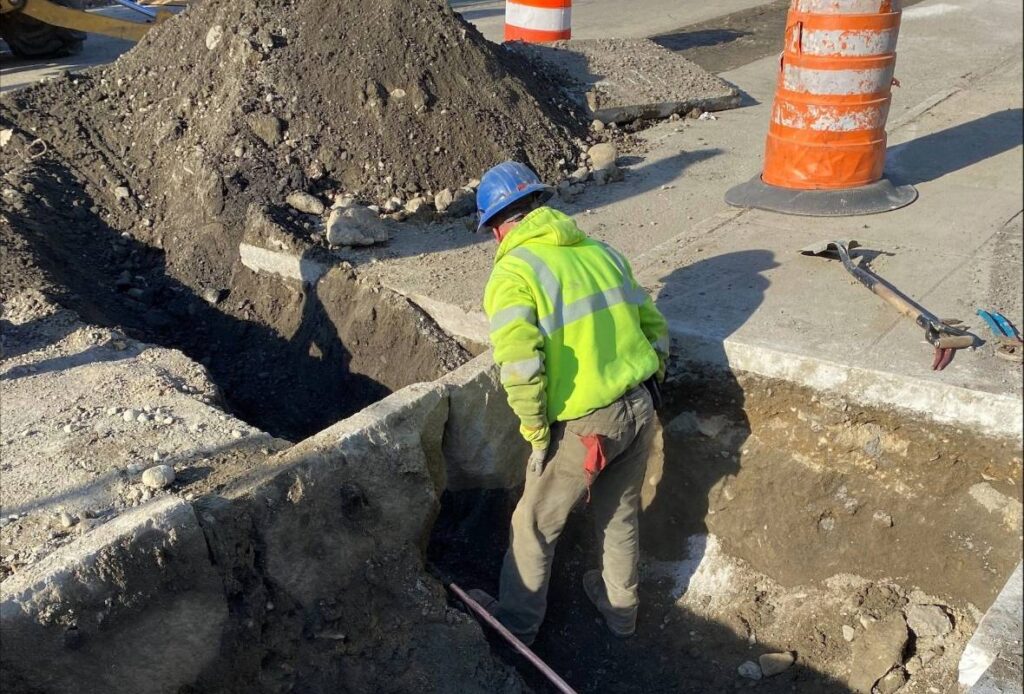
The U.S. Environmental Protection Agency (EPA) on Tuesday announced $3 billion in funding for states to accelerate lead service line replacement, as well as the redistribution of $1.1 billion in previously usused funds. It also announced an adjustment to previous estimates of the total number of lead service lines in the United States.
The $3 billion is part of the Bipartisan Infrastrucutre Law’s dedicated funding ($3 billion annually over five years) for lead service line replacement through FY 2026. This $3 billion is the latest installment and the funds flow through the State Revolving Fund (SRF) programs to states. EPA said the funding will accelerate progress in finding and removing lead pipes that deliver water to homes, schools and businesses.
EPA also said in a Nov. 25 press release that it conducted a thorough review of previously awarded funding and assessed updated lead service line data. EPA said the effort was aimed at increasing accountability and ensuring funds were properly distributed to achieve maximum impact in removing lead pipes and reducing lead contamination in drinking water systems.
$1.1 billion in Unused Funds
EPA also announced the redistribution of an $1.1 billion in previously announced DWSRF funding to address lead. These funds were made available to states but have not been used. Consistent with the Safe Drinking Water Act’s directive to reallocate unused funds, EPA said these investments are now available to different eligible states with lead service line replacement needs.
States that have neither obligated or spent any awarded funds since at least fiscal year 2023 will be required to submit a plan to EPA detailing their strategy for expeditiously using funds to address lead before being eligible for new funding. EPA said it is committed to ensuring that the federal funding is used effectively and efficiently to address lead challenges facing local communities. The agency will proactively work with states to ensure they are expeditiously spending this funding by making awards to water systems for lead service line replacement projects.
These funds can be used for lead service line replacement (LSLR) and associated activities like identification, planning, design, and replacement. With this funding, EPA is issuing an Additional Eligibilities for State Implementation of the IIJA DWSRF LSLR Appropriation memorandum underscoring important flexibilities under this appropriation to ensure states can use the funding more efficiently and effectively.
“Supporting drinking water systems as they work around the clock to provide safe water for all Americans is one of EPA’s top priorities,” said EPA’s Assistant Administrator for Water, Jess Kramer. “[This] announcement is a win-win for drinking water systems and for the health and futures of our nation’s children. Not only are we providing $3 billion in new federal assistance for replacing lead pipes, and $1.1 billion in redistributed federal funding, but we also expect that this money will go farther because updated inventory data show far fewer lead pipes across the country.”
New Estimates
The agency released new information indicating there are fewer lead service lines nationwide than previously estimated. EPA’s updated estimate is now 4 million lead service lines, down from 9.2 million previously estimated. EPA said the reduction was driven by improved data provided by service line inventories required under the Lead and Copper Rule Revisions.
The agency also released a new dashboard highlighting information from lead service line inventories provided by states.
EPA said its goal is to ensure the funds are deployed where they are needed most and will distribute funding allotments based on the best available information locating the approximately 4 million active lead service lines.
AWWA files opening brief in Lead and Copper Rule Improvement petition
The American Water Works Association (AWWA) has previously said the average cost to fully replace a single lead service line can be more than $10,000, and has said the cost industrywide could easily exceed $90 billion. It remains to be seen if AWWA and other industry groups will adjust nationwide cost estimates based on EPA’s new figures.
In September, AWWA filed its opening brief in its Petition for Review of the Lead and Copper Rule Improvements as it seeks to address the feasibility of implementing the law. In AWWA petition for review, it mentions that EPA dramatically underestimates the nationwide cost of lead service line replacement. “Even with federal and state infrastructure loans, the cost of lead service line replacement will be borne by communities and their water customers,” AWWA noted.







Leave a Reply