
By John Ryan
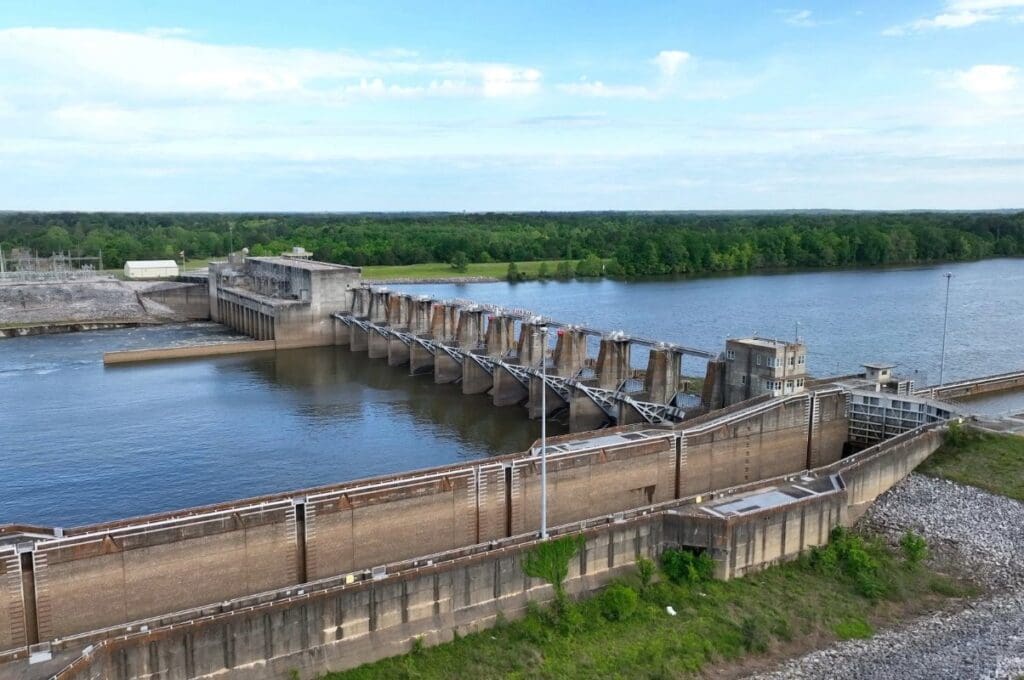
The U.S. Army Corps of Engineers’ Corps Water Infrastructure Finance Program (CWIFP) is an original part of the successful 2014 WIFIA loan program statutory framework. CWIFP’s implementation has been much delayed (more on that later), but the program was finally able to launch a solicitation in 2023 that resulted in 18 qualified applications, with several loans currently underway. Since the program has sufficient unexpended funding for these and other loans, CWIFP’s expectation for a 2026 fiscal year appropriation was a modest $7 million.
Despite the low cost and promising start, the White House FY26 Budget Request proposed zeroing out CWIFP funding and terminating the program. In contrast, the recent House Energy-Water spending bill would authorize $5 million for CWIFP. The Senate Energy-Water bill hasn’t yet come out but based on the Senate’s partial preservation of funding for WIFIA and SRFs in another bill, I’d guess it will be similar to the House proposal. Around $5 million for a continuing program will likely be the ultimate, low-key outcome.
This kind of back-and-forth in the federal budget process is not unusual, of course. It was to be expected that the White House budget proposal this year would be especially political. President Donald Trump’s administration would naturally want to display some ferocity in cutting costly, wasteful and ‘woke’ programs, while understanding that Congressional appropriators would be more pragmatic.
But a question remains: why was CWIFP singled out for, as it were, termination with prejudice? The program’s cost is utterly trivial. WIFIA-type loan programs have proven to be exceptionally efficient at utilizing federal resources to facilitate local funding for infrastructure projects – nothing wasteful about that. Plus, water management infrastructure projects like dams and levees are about the least ‘woke’ things you can possibly imagine. What were the administration’s political and policy goals here?
It gets stranger. The CWIFP cut was included in the White House FY26 Budget summary issued a few weeks before the formal budget request. This ‘skinny’ budget summary is primarily a political document meant to highlight, often in ideological language, significant future actions and policies towards federal spending. Yet zeroing out $7 million in funding for a water infrastructure loan program not only merited a slot in it but a four-sentence justification as well.
The justification’s criticisms are easily dismissed. The first sentence suggests that CWIFP is solely for ‘non-federal dam safety’ projects. This is simply not true with respect to program statutory eligibility. CWIFP’s original primary purpose was to reduce federal outlays by providing finance for locally funded cost-shares in major federally involved infrastructure projects. The 2016 WIFIA loan to the Fargo Moorhead Flood Diversion project is a good example. CWIFP was meant to do more like this. But the 2020 FCRA Criteria effectively blocked cost-share eligibility. CWIFP was left to pursue what it still could – for now, that is, until the deeply flawed and dishonest criteria are fixed. It is disingenuous to imply that the criteria will permanently override statutory eligibility. They won’t.
The second and third sentences essentially assert that there’s no need for federal finance in the dam safety sector and anyway other federal finance programs will meet this…um, non-need? Fact and logic-free assertions aren’t credible. Just saying.
The final sentence huffily informs us that the Army Corps of Engineers is not a bank, and finance is not its core mission. Who knew? Now tell us about U.S. EPA and U.S. DOT, federal agencies that very effectively administer WIFIA and TIFIA, respectively. Tell us about how complex infrastructure project financings might benefit from sectoral involvement and experience. We’ll wait.
Misinformation Hit Job
The poor quality of the justification combined with the overall strangeness of the administration’s proposal to terminate CWIFP points to something other than a lack of information. It’s been widely reported that many of the proposed cuts were identified by DOGE. Yes, it’s easy to imagine that a young and inexperienced DOGE guy, under pressure to add to the list, would be only cursorily informed about some of the programs being included. But even the slightest direct investigation about CWIFP would have produced a more credible justification, if there could be one. And why would an ambitious DOGE guy spend precious time on a program that was obviously non-ideological and practically costless, were the decision up to him?
Much more likely is that CWIFP’s proposed termination and its slap-dash justification came from within the federal bureaucracy, either directly or fed to an inexperienced DOGE staffer. Since the relevant bureaucrats would certainly know better, there can be only one conclusion — the proposed termination was based, not on policy consideration or poor information, but on intentional misinformation in furtherance of a private agenda indifferent to, or at even at variance with, the Trump administration’s overall goals.
It’s not hard to guess the origins of this misinformation. A recent Politico E&E article on CWIFP quotes several experts and former officials who point to an OMB office as the source of the ‘unprecedented’ level of delays and obstructions that the program has faced, relative to EPA’s WIFIA. My own view is that the sole purpose of OMB’s FCRA Criteria was to radically limit CWIFP statutory eligibility by distorting federal budget rules. Misinformation about CWIFP fed into the FY26 Budget Request would seem to be the third hit job against CWIFP by the same OMB bureaucrats responsible for the prior two. They deserve credit for persistence, if not much else.
In a way, this unedifying origin of the CWIFP cut is better than if it were the result of serious policy consideration. Private bureaucratic agendas, especially ones as strange and irrational as hatred towards a specific part of a water infrastructure loan program (I mean, really??), don’t accomplish much in the end. CWIFP has been successfully launched, the FCRA Criteria will be fixed one way or another, and the final FY26 federal budget will likely include funding for a continuing program. And some bureaucrats’ sad private agenda? It will be forgotten soon enough.

John Ryan is principal of InRecap LLC, focused on debt alternatives for the recapitalization of basic public infrastructure. Ryan has an extensive background in structured and project finance, and recently served as an expert consultant to the U.S. EPA. He is a frequent contributor to WF&M on EPA’s WIFIA loan program and related topics.










Leave a Reply