
By David Stewart Jones
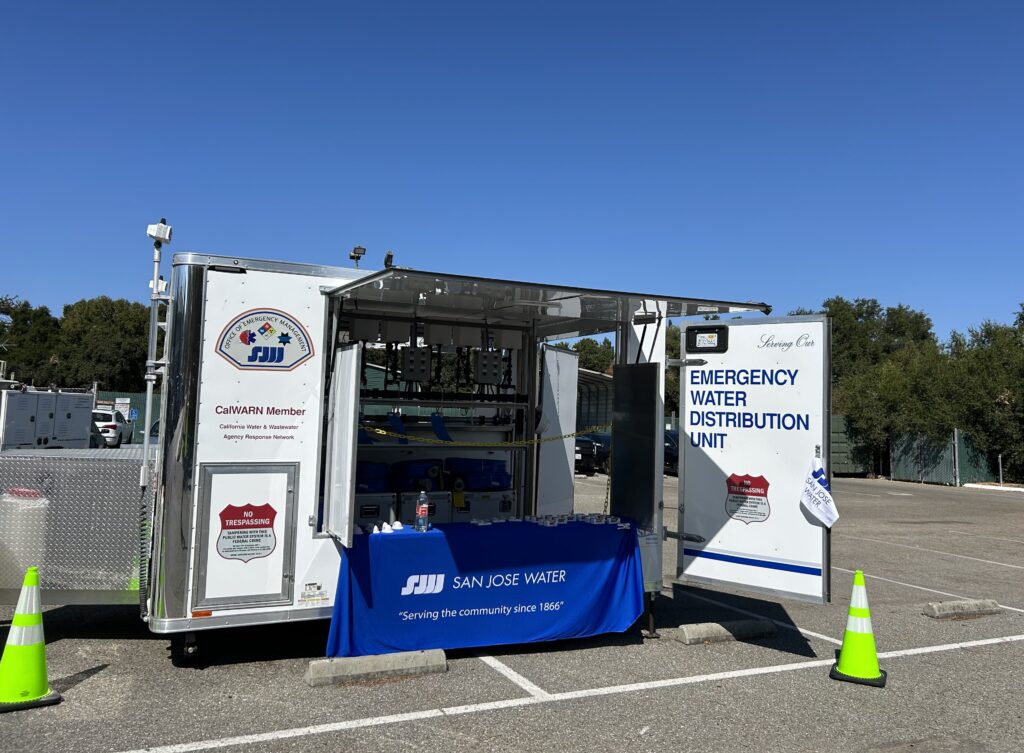
A demonstration of San Jose Water’s new Emergency Water Distribution Unit (EWDU) in March 2024 highlighted the collaborative development crucial to creating a rapid-response mobile unit enabling quick and efficient drinking water delivery and distribution directly to customers during water outages, boil-water notices and emergency disaster response.
The EWDU is a fully self-contained mobile water distribution station designed and manufactured by SCG Process in collaboration with San Jose Water’s emergency management team for accommodating high-volume public engagement at a moment’s notice — particularly crucial for San Jose Water given the high risk of seismic activity in the Bay Area and the potential for water distribution system failures following earthquakes.
“Every minute matters in an emergency,” says Jake Walsh, San Jose Water’s Assistant Chief of Engineers, Planning. “Our new EWDU enables us to deploy safe water directly to our customers as quickly as possible and get closer to where the problem or event is happening — instead of loading up crates of bottled water on vehicles and transporting them to some central distribution site that may not be anywhere close to the actual water event or affected area.”
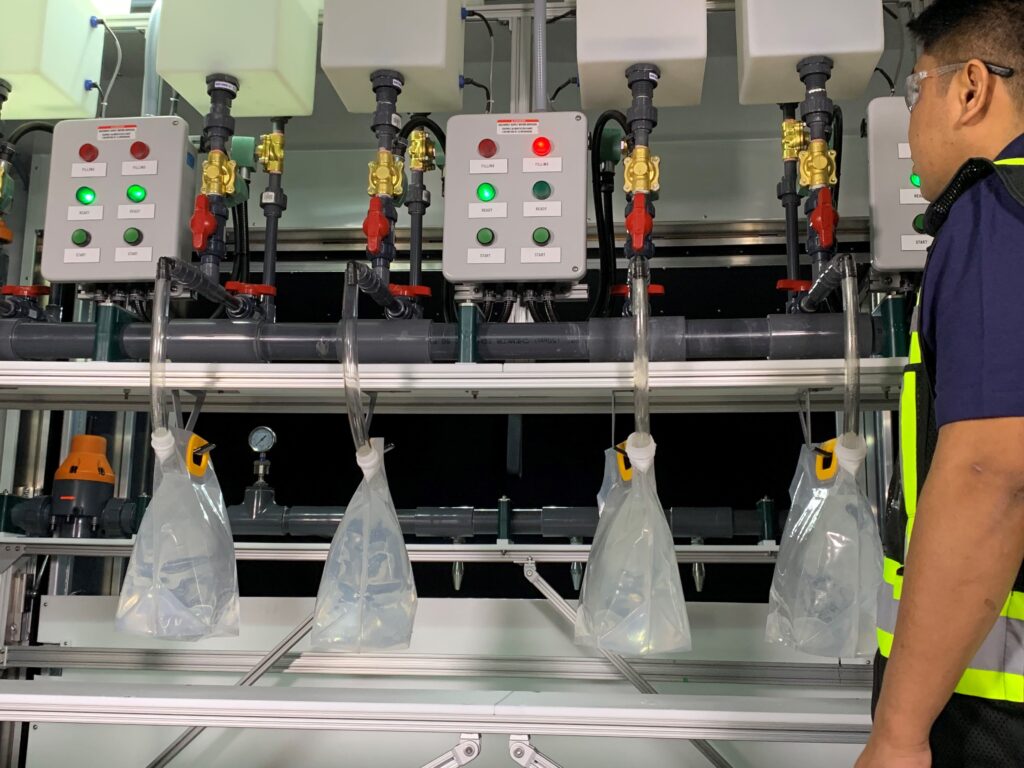
Walsh says utilities relying solely on bottled water is inherently wasteful, inefficient, and creates potential environmental impacts. “Especially with the large amount of bottled water we have been storing, transporting, and delivering to customers every time there’s a water outage or boiled-water notice,” says Walsh. “The EWDU dispensing water in our free reusable plastic bags is much more environmentally conscious and energy efficient for us and the community. The public can come and fill their own water storage containers if they choose, but the EWDU simply provides more options for our customers aside from generating massive single-use waste plastic from dispensing bottled water.”
Plug-and-Play Emergency Management Tool
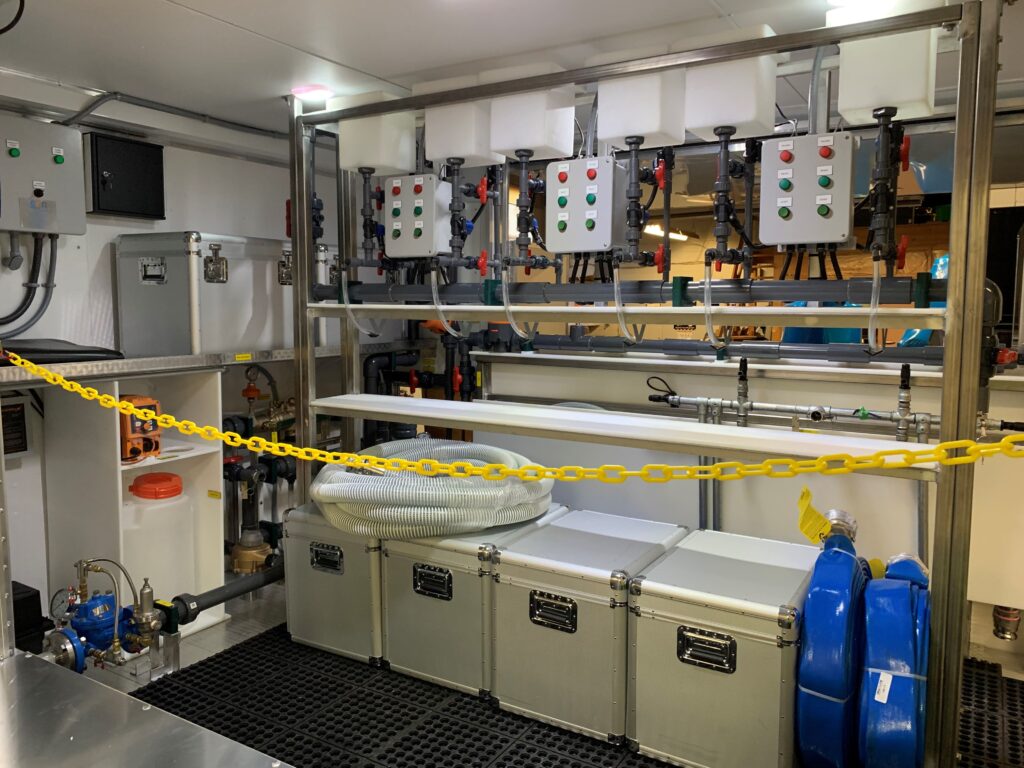
Offered in several configurations by SCG Process, the trailer-based EWDU is typically equipped with 18 water-tap stations for dispensing water directly to the public. NSF-61 rated equipment, backflow prevention, and an integrated chlorination system enable safe and reliable water drawn from hydrants, water-tanker trucks, or transportable “water pillow” storage bladders. Purpose-built for rapid deployment, all the EWDU’s equipment, tools, hoses, fittings, traffic cones, and public safety management gear is stored inside the unit, ready to roll.
“The EWDU is a plug-and-play, clean and hygienic, well-designed tool for emergency management that can be quickly deployable across a service area and offers multiple capabilities to deal with different scenarios,” says David Fernandez, San Jose Water’s Director of Emergency Management, Security and Business Resiliency. Fernandez believes the design and manufacturing of emergency-grade water utility equipment like the EWDU should follow closely the design and manufacturing principles of fire trucks and firefighting equipment. Why? Performing mutual aid in support of another first-responder, utility, municipality, or jurisdiction, requires equipment that is field-compatible and simple enough to operate without extensive training.
“We worked closely with SCG Process to enhance the EWDU design to meet our local needs in California so it’s more efficient and functional from an emergency management perspective, and uses standard water-utility fittings, functions, and controls already familiar to our field crews,” says Fernandez.
San Jose Water plans to showcase their EWDU at events or functions involving other nearby water utilities, fire departments, and emergency services seeking to upgrade their equipment capabilities through federal grants.
“As an example, if multiple jurisdictions in a county obtained EWDUs, we could combine them all into a single fleet resource that could be locally allocated and dispatched in the event of a large earthquake, natural disaster, or major emergency,” says Fernandez. “If there’s an earthquake or wildfires in other parts of the state, our combined fleet could be mobilized to provide water to communities there that have been damaged or destroyed.”
Social Equity “Game-Changer”
Deploying the EWDU also helps San Jose Water cope with significant changes occurring in population density, distribution — and income disparity.
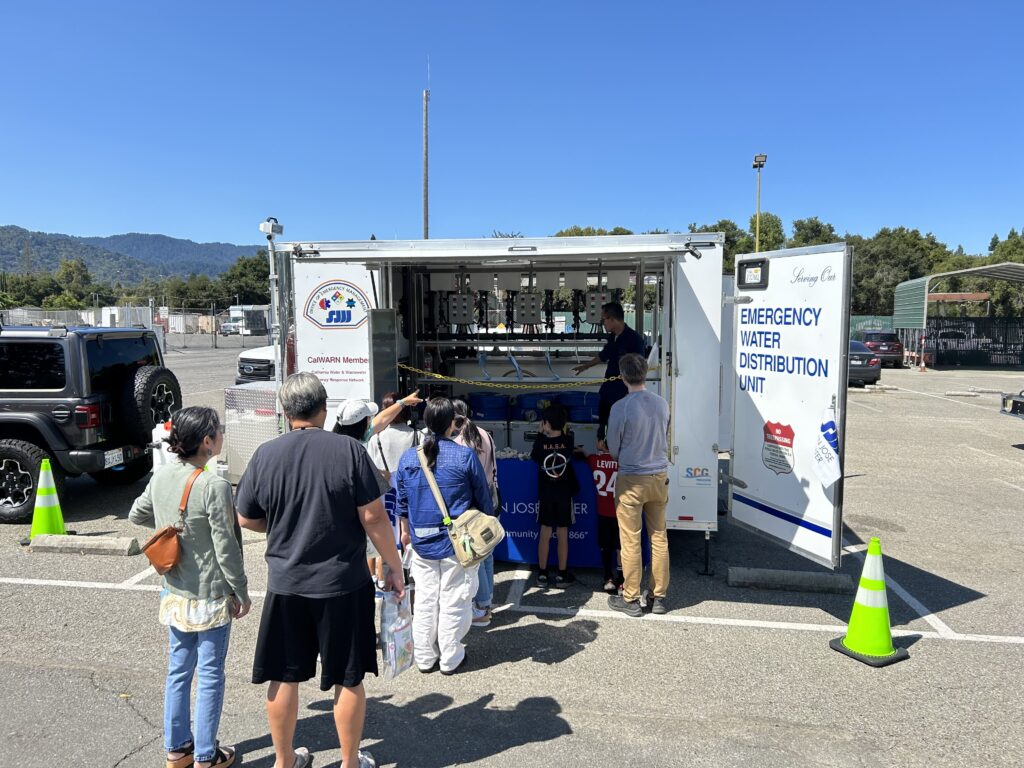
“What once was primarily small single-family dwellings have now become mostly large apartment buildings,” says Fernandez. “A water main break or outage occurring years ago involved maybe only 15 or 20 customers, but now involves hundreds of families out of water. Consider the difference of being forced to deliver bottled water to a thousand customers, compared to simply deploying a single EWDU dispensing water drawn from a nearby hydrant. It’s a game changer.”
How San Jose Water Uses Asset Management to Keep the Water Flowing
Another EWDU “game changer” enables San Jose Water to provide all the communities they serve equal access to safe drinking water when needed. The CPUC in 2022 adopted an Environmental and Social Justice Action Plan documenting their commitment to advancing the principles of environmental and social justice. As San Jose Water is an investor-owned water utility operating in California, Walsh and Fernandez remain keen to evaluate new tools, technologies and solutions that align with those environmental and social justice commitments while simultaneously helping the utility deliver high-quality water and exceptional service.
“We know from experience with the aftermath of major storms and disasters that the ones who are impacted most by emergency response and recovery efforts are the low-income communities,” says Fernandez. “So, our EWDU is a tool that enables us to provide equitable service for those folks who are economically disadvantaged. We expect these advantages and benefits to initiate a trend toward adoption by other water utilities with similar needs.”
Even boil-water notices can exacerbate existing social inequalities — particularly in low-income communities — and communities of color are often disproportionately affected by water crises, adds Walsh. “Our portable emergency water dispensing unit enables equitable access to safe drinking water to all impacted communities — and more. Investing in this Emergency Water Distribution Unit program promotes environmental sustainability and social equity, but also helps San Jose Water build customer trust and satisfaction and boost our long-term brand value as a company.”

David Stewart Jones is a Toronto-based freelance writer and researcher specializing in water and wastewater management issues. With extensive experience covering various facets of the industry, he brings a seasoned perspective to his work. David can be reached at davidstewartjones@outlook.com.








Leave a Reply