
By Brandon Festa & Jason Hackbarth
A wastewater treatment plant has four distinct process environments joined by a common hydraulic path, and the media characteristics shift substantially at each stage. Raw influent arriving at headworks is often thick with grit, rags, and unpredictable debris. By the time the same stream reaches disinfection, total suspended solids have dropped by more than 90 percent through primary and secondary treatment, leaving a comparatively clean effluent with very different flow and pressure characteristics.
Valve selection in wastewater treatment plants must account for changes in these operating variables, including media viscosity, particulate loading, differential pressure, and duty cycle. A valve body and seat design optimized for bidirectional sealing against grit-laden raw sewage will rarely deliver the same Cv or head-loss performance required for throttling clarified effluent, and vice versa. Operators and engineers must match valve type, trim material, and seat design to each stage’s operating parameters.
Headworks is the Toughest Valve Environment
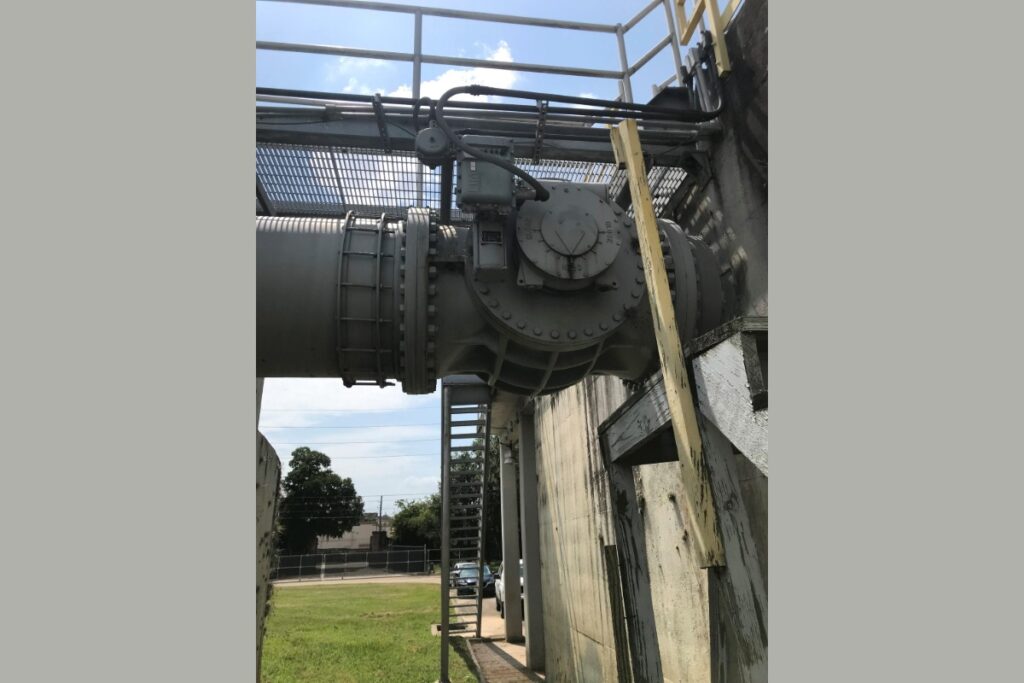
Headworks and collection present the harshest operating environment in the plant. Flow arrives from lift stations and force mains carrying abrasive grit, rags, and surges that can overwhelm downstream equipment if not managed. Slide gates and sluice gates handle bulk channel isolation best and are built to withstand significant hydraulic head while resisting the corrosive effects of raw sewage. For isolating the flow itself, eccentric plug valves have become the standard, since their offset or eccentric plug face design rotates fully out of the flow path and avoids the packing and seating problems that straight-through designs develop when grit works its way into the seal. Swing check valves protect pumps from backflow, and air valves prevent pressure-surge damage that can occur when large air pockets move through force mains during pump cycling.
Primary Treatment Requires Valves to Slide and Seal
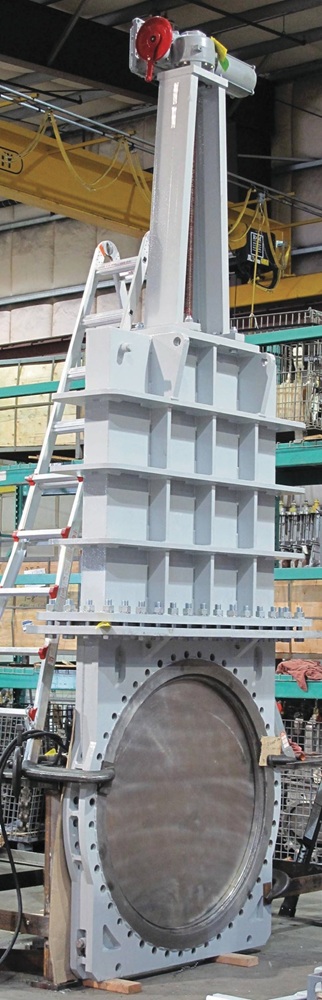
Primary treatment shifts the challenge from raw solids to settled sludge. Clarifiers remove roughly half of total suspended solids at this stage, and the valves controlling sludge withdrawal often sit idle for extended periods under heavy, viscous material before operating on demand. This is where knife gate valves are a good choice. A guillotine-style blade cuts directly through compacted sludge rather than trying to seat against it, which is important after a valve has been closed for long periods. Plug valves continue to serve as isolation and throttling duty in sludge lines, while slide gates isolate entire clarifier basins for draining and maintenance without requiring the basin to be taken fully offline elsewhere in the plant.
Air and Biological Treatment Require Precision Valves
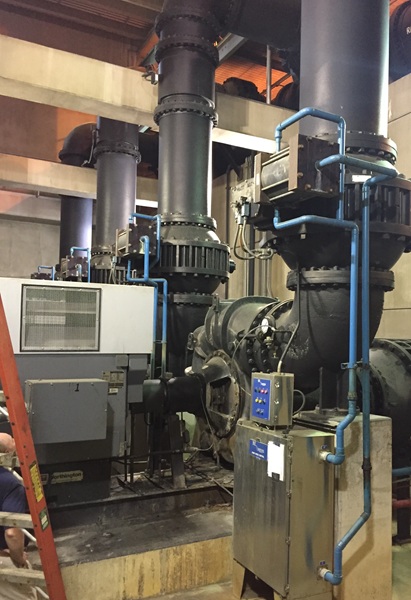
Secondary biological treatment introduces an entirely different set of demands, split between air handling and mixed liquor control. High-efficiency blowers push large volumes of hot, high-velocity air into aeration basins to oxygenate the microorganisms that consume dissolved organic matter. The high temperature air stream calls for butterfly valves rated for elevated temperatures rather than standard water-service trim. On the liquid side, the return activated sludge and waste activated sludge lines carry the microbial population, and losing isolation control at this point can disrupt the biological balance the entire process depends on. Plug valves built to the AWWA C517 standard remain the prudent choice for this duty because they combine reliable isolation with the throttling precision operators need to manage recirculation rates. Check valves protecting blower equipment from sludge intrusion need to operate passively and without maintenance, so quality matters, as a stuck check valve in this location can take a blower offline.
Disinfection and Biosolids Have Different Streams Requiring Different Valves
By the time flow reaches disinfection and biosolids handling, the plant is managing two very different streams heading in opposite directions. Clarified water moves into contact tanks for chemical disinfection before discharge, while waste sludge is thickened, stabilized in anaerobic digesters, and dewatered. Effluent lines, particularly in larger transmission sizes, rely on solid wedge gate valves for full-port isolation with minimal head loss, while rubber-seated ball valves handle high-velocity pump discharge applications where dropping line pressure without eroding downstream piping is the priority.
Air release and vacuum valves prevent the pipe collapse that can result when negative line pressure due to siphoning or draining occurs in large transmission lines during maintenance events, a failure mode that is easy to overlook until it happens. On the biosolids side, knife gates and shear gates continue to handle the abrasive, high-solids media moving toward the digesters.
The Cost of Getting It Wrong When It’s Easy to Get Right
The economics of getting this wrong tend to show up gradually rather than all at once. A valve that seizes under sludge does not usually fail outright; it becomes progressively harder to operate until a routine maintenance task reveals the problem. A check valve that cannot pass ragging material without binding does not announce itself either, until a blower trips offline. These failures can drive up total cost of ownership well beyond the price difference between a general-purpose valve and one engineered for the specific application.
Finding a manufacturer with a range of valves designed for different stages of wastewater treatment can simplify selection, since all options are readily available. Brands like Pratt® and Mueller® have eccentric plug valves for grit-laden isolation, custom knife gates for sludge service, high-temperature butterfly valves for air handling, and full-port ball and gate valves for high-velocity discharge, each designed to solve a distinct engineering challenge rather than a generic one.
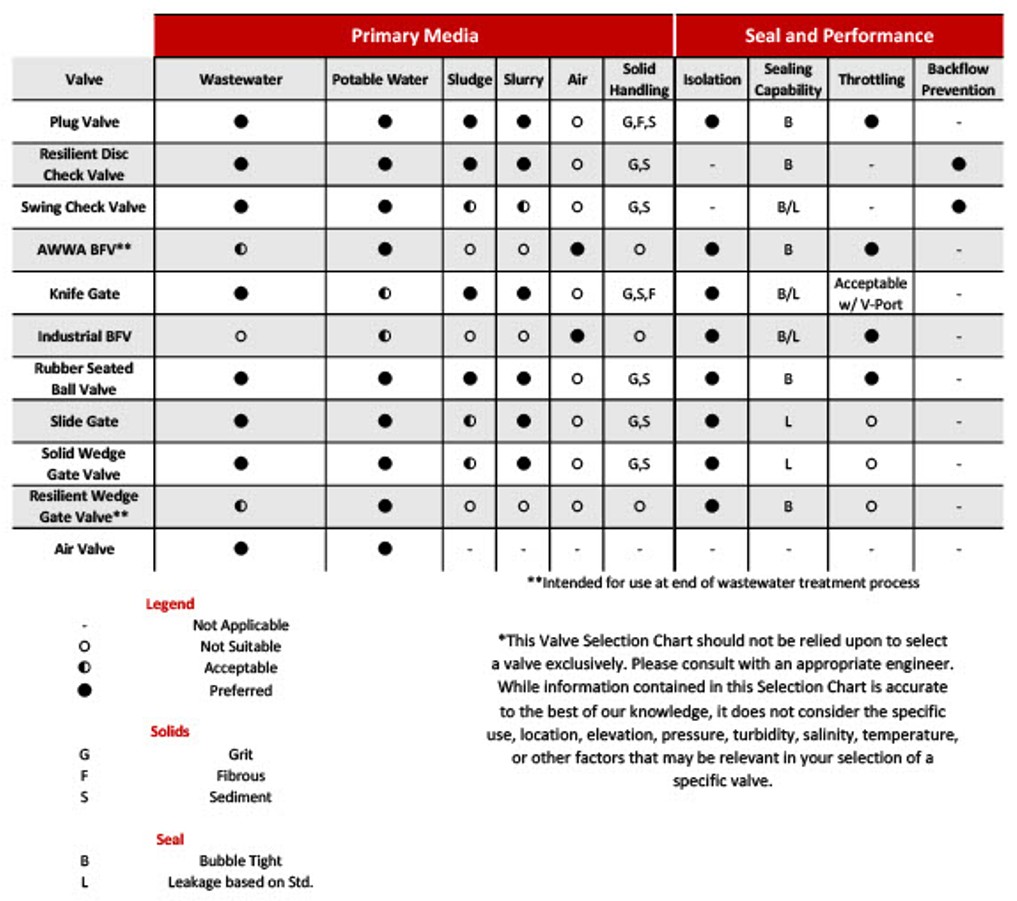
To avoid seized gates from sludge buildup, degraded seats from abrasive grit, or check valves that cannot pass ragging material without binding, be sure to match valve technology to the fluid type at each location and choose a quality manufacturer that guarantees performance under these tough conditions.
ABOUT THE AUTHORS
Brandon Festa is an application engineer with Henry Pratt, a Mueller brand. Festa works closely with customers, engineers, and manufacturing teams to provide technical quotations, product application support, and engineered solutions for municipal and industrial valve systems.
Jason Hackbarth is a product associate for Mueller. Hackbarth uses his engineering background and product expertise to collaborate with customers on optimal gate valve solutions. He works with project managers on specifications and performance requirements to deliver valuable infrastructure solutions.








Leave a Reply