
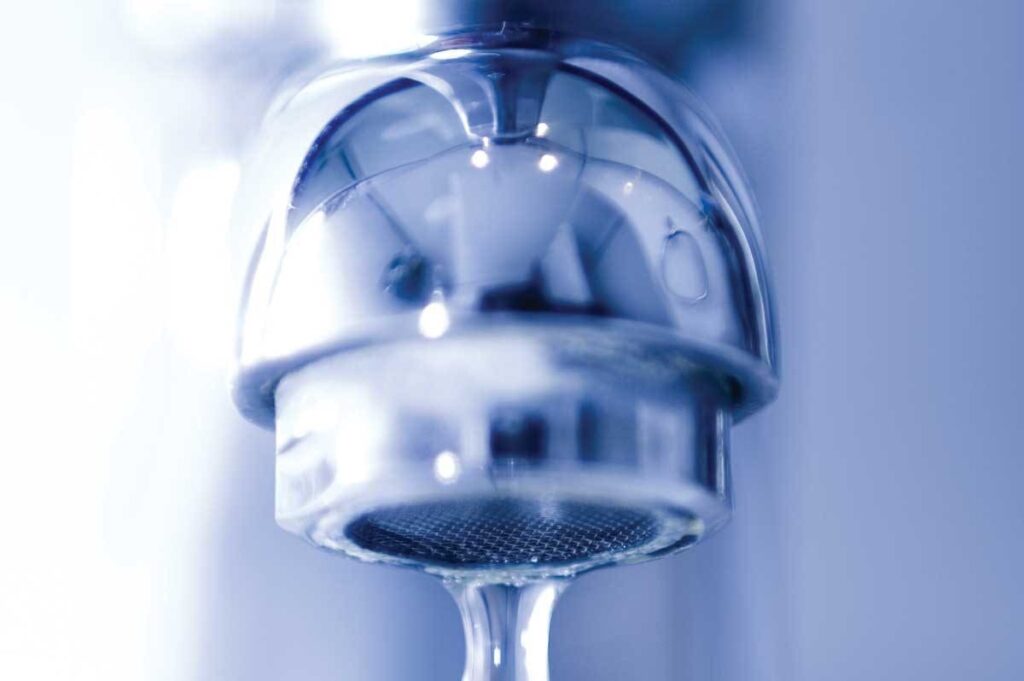
A new Water Research Foundation (WRF) study reveals steady improvements have been made over time in residential water use efficiency.
The Water Research Foundation, in partnership with water monitoring solutions company Flume and consultant WaterDM, announced the publication of the 2026 Residential End Uses of Water, Version 3: A Single-Family and Multi-Family Study (project 5242). The study is a comprehensive update to similar 1999 and 2016 studies. Together, the three studies provide a 30-year view of residential water use across North America.
According to the project team, the new study expands on prior research, incorporating a broader and more diverse set of study sites, introducing the first ever analysis of multi-family water use, and offering new insights into regional similarities and differences.
The Water Research Foundation first selected Flume in 2024 to conduct the study, with efforts being led by Peter Mayer, Principal of WaterDM, a consultant for Flume.
The study includes data from 52 participating utilities across the United States and Canada. The third version also includes high-resolution water use data collected from more than 69,000 single-family and 1,000 multi-family homes by Flume.
As Flume noted, the largest water-using customer segment in North America is the residential sector, which plays a major role in overall demand. A press release about the new study addressed some of the highlights, notably that over the past 30 years, indoor residential water use has become substantially more efficient. This is due to the long-term impact of technology improvements, standards and conservation efforts.
The study found these reductions are driven largely by reductions in indoor use. Average indoor consumption fell from 69.3 gallons per capita per day (GPCD) in 1999 to 38.5 GPCD in 2026, with decreases recorded across every indoor category, the study noted.
The most substantial reductions were seen in clothes washers, toilets and faucets. For the first time, the study also analyzed multi-family water use, with indoor use in small, individually metered buildings (2–6 units) averaging 39.8 GPCD.
Efficiency improvements in household fixtures and appliances are driving these trends, the study noted.
The study noted advancements in the efficiency of clothes washers has contributed to a 67.6% reduction — about 10 GPCD — in per capita use since 1999 due to evolving federal energy standards. Toilet use has also steadily declined, with the average flush volume dropping to 1.84 gallons in 2026, a 46.6% decrease compared to 1999.
“The primary reason for the changes in indoor use measured across these three studies is the installation and use of water efficient fixtures and appliances,” said Mayer, who has served as lead author of all three Residential End Uses of Water studies. “National plumbing codes and energy standards have improved efficiency without requiring people to change their water use behaviors at home much, if at all.”
“The Residential End Uses of Water studies have been some of the most downloaded and cited studies conducted by the Water Research Foundation,” said Kenan Ozekin, Chief Research Officer for the Water Research Foundation. “These studies have helped utilities, planners, private industry, and more, offering improved understanding of where and how water is used in residential settings using basic customer billing data together with innovative high-resolution measurement techniques.”
“Previous generations of end-use studies relied on relatively small samples and labor-intensive data collection methods,” said James Fazio, CTO of Flume. “Flume’s platform enables us to collect high-resolution water use data at unprecedented scale and then apply advanced analytics to disaggregate that data into individual end uses like toilets, showers, clothes washers, irrigation and leaks. This combination of scale and granularity gives utilities, researchers, and policymakers a much clearer understanding of how water is actually being used in homes and how those patterns are evolving over time.”
Project deliverables include a Summary Report, a comprehensive report, an interactive online data dashboard where users can explore and visualize the study’s datasets, as well as the option to view values in metric units, and an educational dataset for researchers.
View the final report on the WRF website here.
About The Water Research Foundation
The Water Research Foundation is a nonprofit, educational organization that funds, manages, and publishes research on the technology, operation, and management of drinking water, wastewater, reuse, and stormwater systems.
About Flume
Flume is a water technology company founded in 2015 and headquartered in San Luis Obispo, California. Flume’s platform captures high-resolution water data from hundreds of thousands of homes across the United States, generating trillions of data points each year. Using advanced analytics and machine learning, Flume helps utilities, researchers, and organizations better understand how water is used at the household level.
Source/s: Flume, Water Research Foundation








Leave a Reply