
Water loss is one of the most persistent and costly challenges facing utilities today. Nationwide, non-revenue water (NRW) drains budgets, strains infrastructure, and quietly erodes public trust. Yet for most utilities, identifying the source of that loss has meant expensive equipment and manual, often ineffective, surveys, resulting in little control or return on investment. The problem isn’t a lack of willingness to fix it. It’s a lack of options. For years, the water industry has been chasing NRW using reactionary methodologies and aftermarket technology.
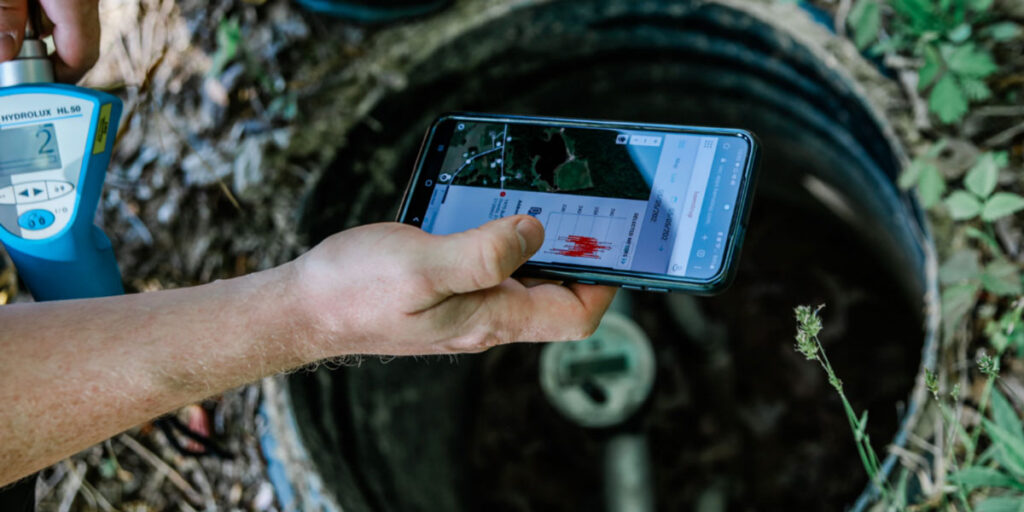
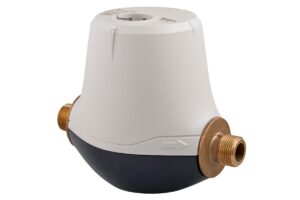
Today, utilities have an option—an innovative and radically simple solution to combat NRW: a water meter. The flowIQ® 2200 and 3200 ultrasonic water meters from Kamstrup feature embedded Acoustic Leak Detection (ALD), which combats distribution water loss with no additional hardware, no extra batteries, and no separate loggers to deploy and retrieve.
How It Works
The flowIQ® meters with built-in ALD listen within the water column and collect 26 acoustic samples per day to establish a baseline noise-floor transmission for each meter location. When that floor rises and stays elevated (the telltale hiss or whoosh of a hidden leak), the meter flags it. Data flows back to user-friendly software that maps flagged meters, displays acoustic histories, and helps crews prioritize maintenance and repair work. No wasted truck rolls. Fewer emergencies.
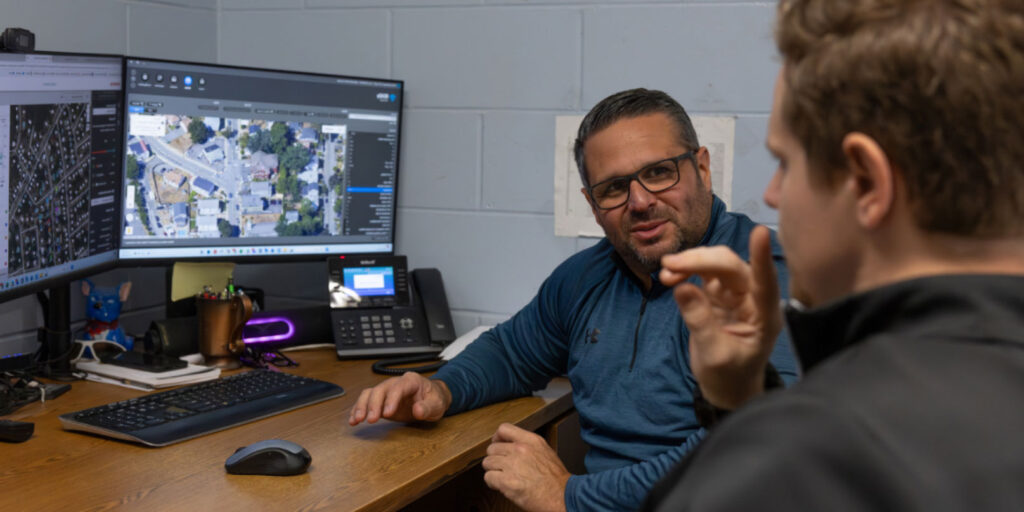
Because residential meters are typically spaced every 50 to 100 feet, ALD delivers 10 times the sensor coverage per mile compared to traditional acoustic loggers, expanding infrastructure insights and geolocation data. That kind of density matters when roughly 50% of distribution system leaks occur at service connections, the exact locations where every ultrasonic meter sits.
ALD turns existing infrastructure into a multipurpose tool for infrastructure intelligence. Moreover, because the sensor is located at the service connection, utilities can also distinguish between customer-side leaks and distribution system leaks, a distinction that is often difficult with traditional survey methods.
What This Looks Like in the Real World
Prior to transitioning to Kamstrup ALD, Oneida, Tennessee, was losing 51% of its produced water, more than 200 million gallons annually, or $186,000 in lost revenue. The treatment plant was running up to 16 hours a day just to keep pace. The city was on probation with the state. They needed a solution, not another survey.

In 2019, Oneida replaced 4,620 mechanical meters with Kamstrup ALD-equipped flowIQ® meters, making them the first fully deployed ALD system in the United States. When activated, 77 meters immediately flagged potential leaks. Oneida quickly reskilled its meter readers to form a new leak-assessment and repair crew, and over 70 leaks were confirmed and repaired. Within three months, water loss dropped from 51% to 28%. Of the many leaks Oneida reported, a significant discovery included a service line leak just 50 feet from a meter that had gone undetected for at least 135 days, resulting in a loss of 777,000 gallons.
Today, Oneida’s water loss stands at 15%, an overall reduction of more than two-thirds. Annually, the utility saves $140,000 in recovered revenue. Daily, its treatment plant runs three to four fewer hours, freeing up 36 working days annually for staff to reinvest in system improvements.
“We went from being on probation to being a source of pride for the state of Tennessee.”
Oneida isn’t alone. In Madison County, Alabama, ALD meters flagged a non-surfacing 5 GPM leak in a polyethylene service line that had been draining into a nearby creek for two months. Left unresolved, it would have resulted in an annual loss of 2.6 million gallons. Early detection allowed the utility to address the problem before the financial and environmental damage compounded.
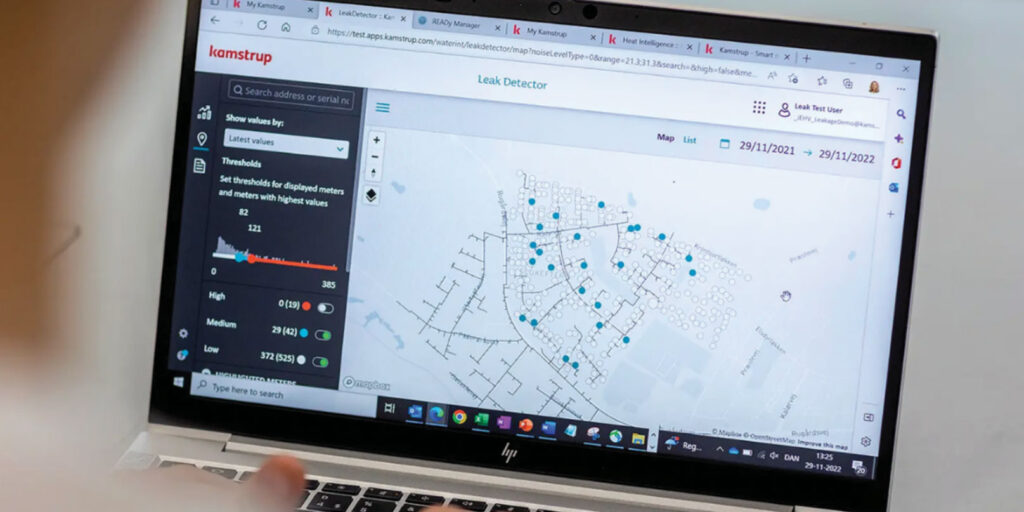
In Oregon’s Row River Valley, ALD technology demonstrated its powerful reach when a flowIQ® 2200 meter flagged a 30 GPM main line leak from half a mile away.
A 20-Year Solution, Not a Short-Term Fix
What makes ALD genuinely different from bolt-on solutions isn’t just the technology. It’s the economics. Because ALD operates through the meter’s existing ultrasonic sensor, it doesn’t impact battery life or metering accuracy. The same 20-year battery life that makes Kamstrup’s flowIQ® meters a proven long-term investment applies to their leak-detection capability. It’s simply an added benefit that the infrastructure investment you’ve already budgeted for now includes a built-in NRW solution.
For utilities wrestling with aging infrastructure, tightening budgets, and increasing regulatory pressure to reduce water loss, this kind of built-in, always-on intelligence isn’t a luxury. It’s a necessity.
See ALD in action at kamstrup.com/en-us/water-solutions/solutions/ald.
Sponsored by:








Leave a Reply