
By Paul Gagliardo
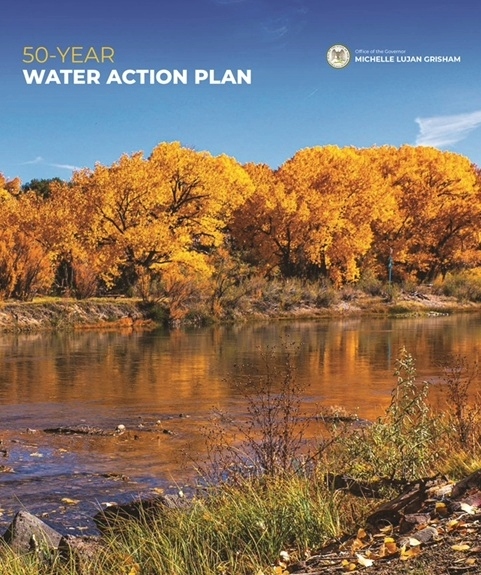
New Mexico Gov. Lujan Grisham announced New Mexico’s 50-Year Water Action Plan in 2024. Climate change is threatening the precious water resource that holds immeasurable cultural, agricultural, ecological, economic and recreational value to the state. Complex issues are affecting all aspects of water supply; precipitation is more variable, and snowpack, runoff and aquifer recharge are declining. Higher temperatures are drying landscapes leading to increased erosion and more extreme wildfires. It is estimated that the state will have 25% less water supply over the next 50 years.
It is critically important that the state takes the lead in managing this issue. New Mexico is already a leader in efficient water use having a total per capita water usage of 81 gallons per day, compared to Colorado at 123 gallons per day and Utah at 169 gallons per person per day.
The Water Action Plan prioritizes actions related to water conservation, creating new water supplies and protecting watersheds. It contains a number of goals. The goals pertaining to water conservation are:
- Develop a public education campaign to inform New Mexicans about the source of their water and what they can do to conserve.
- Incentivize agricultural water conservation to increase producers’ voluntary adoption of high efficiency irrigation technology.
- Reduce leaks in municipal water systems by deploying innovative technology and sensing systems to reduce real water losses.
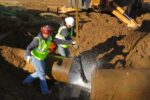
- Improve water system infrastructure by repairing and modernizing existing systems.
The goals pertaining to creating new water supplies are:
- Establish a Strategic Water Supply Fund to spur investment sin desalination and wastewater treatment.
- Adopt policies to promote potable and non-potable reuse.
- Improve groundwater mapping and establish a statewide monitoring network.
The goals pertaining to protecting water supplies and watersheds are:
- Cleanup contaminated groundwater sites.
- Protect surface waters by controlling pollution through a discharge permitting program.
- Modernize wastewater treatment plants and stormwater infrastructure.
- Protect and restore watersheds to reduce risks from wildfires, floods and large scale erosion.
Many other states and regional entities develop comprehensive plans to address various issues. Many times, these recommendations and mandates do not come with any identified funding source. These unfunded mandates become burdens directly on the utility and the customer. New Mexico has taken a unique approach to implementing the programs detailed for each of the state-wide goals.
More from Paul Gagliardo — Bid Docs and Product Specs: Why They Are Critical Project Components
The goals in the Action Plan address not only statewide issues but also local issues. Most of the projects contemplated are local projects that historically would have to be developed by the local utility. The process for utility capital projects tends to be complicated and lengthy. The utility must first identify the project to be developed. A planning study is performed to determine best option and costs. Preliminary engineering work is performed to ensure viability. Funds need to be raised. Funding can come from loans or grants that the utility applies for. Or, a utility can sell bonds or raise rates to pay for the improvements.
What is common among all these funding options is the need for upfront capital to accomplish all of the pre-planning work. This is where the state of New Mexico is taking a proactive approach. They are front funding the preliminary work that supports both the local need and statewide objectives.
The state is establishing a $40 million State Strategic Water Supply Fund that will support the purchases of water and build the clean energy economy. It will also support state and local economic development goals through support for public-private partnerships to develop brackish water resources. The Strategic Water Supply Act (HB 137) was enacted in April 2025. New Mexico allocated $51.5 million for brackish water development projects and underground aquifer mapping by the New Mexico Bureau of Geology and Mineral Resources. This effort will establish a statewide groundwater monitoring network to help support local utilities make better ongoing water management decisions.
This funding mechanism is in contrast to the state of California. In 2014, California passed the Sustainable Groundwater Management Act (SGMA) which requires local agencies to form Groundwater Sustainability Agencies (SGAs) to develop and implement Groundwater Sustainability Plans (GSPs). The cost to implement these plans falls on the local agency and landowner.
A program that has been established in 2025 is already creating benefits and making progress toward the goal of reducing water leakage from municipal water systems by 25% by 2040. To advance this action item in New Mexico’s 50-year plan, the Environment Department signed a $4 million contract with ASTERRA to provide intelligence and insight on below ground, non-surfacing, potable water system leaks around the state using an innovative satellite-based remote earth observation technology. This technology utilizes L-band radar to survey large areas of land and is the first of its kind capable of monitoring soil characteristics such as moisture levels that have a potable water signature. 30-mile by 40-mile satellite surveys are collected and the backscatter is analyzed using a proprietary algorithm to determine likely leak locations.
This is an innovative way for a state government to achieve its water supply and management goals. The state has no direct authority over the local water distribution systems. They must develop novel approaches to boost overall water availability, complementing traditional methods for increasing supply such as dam construction or offering loans and grants for the development of new water facilities. By funding the front-end work to identify leaking pipes in local systems, ASTERRA can provide valuable information to the retail utility to repair pipes and recover lost water supply. This saves the utility money, reduces some of the need for rate increases for customers, maintains system reliability and service levels and saves water for beneficial use.
More from Paul Gagliardo — Using Vendor Benchmark Data to Determine a Cost-Effective Leak Detection Program
It has been shown that the marginal cost of generating effective new water supply through finding and fixing leaks is less expensive than recycling wastewater, treating brackish groundwater or constructing storage facilities. It also takes less time to implement leak repair programs than to plan and construct new, large scale capital programs, and it has less negative environmental impacts. This program is usually supplied directly to utilities so that they can find and fix leaks in their system.
In this case, the state stepped in and provided a comprehensive leak detection solution to small, rural utilities, and municipalities so that overall water loss in the state can be reduced. This program supports local utilities by pinpointing leak locations so crews can be deployed to repair the leaks before they burst and cause serious problems.
This model demonstrates how state environmental water agencies can implement actions that achieve the goals of the state action plan and assist local agencies with water supply and treatment issues.

Paul Gagliardo, MPH, P.E., is an independent consultant providing advice to firms interested in the municipal water business. Gagliardo created and operated a water technology research center in the City of San Diego and directed the Innovation Program at American Water for nine years. He is the host of The Water Entrepreneur podcast.







Leave a Reply