
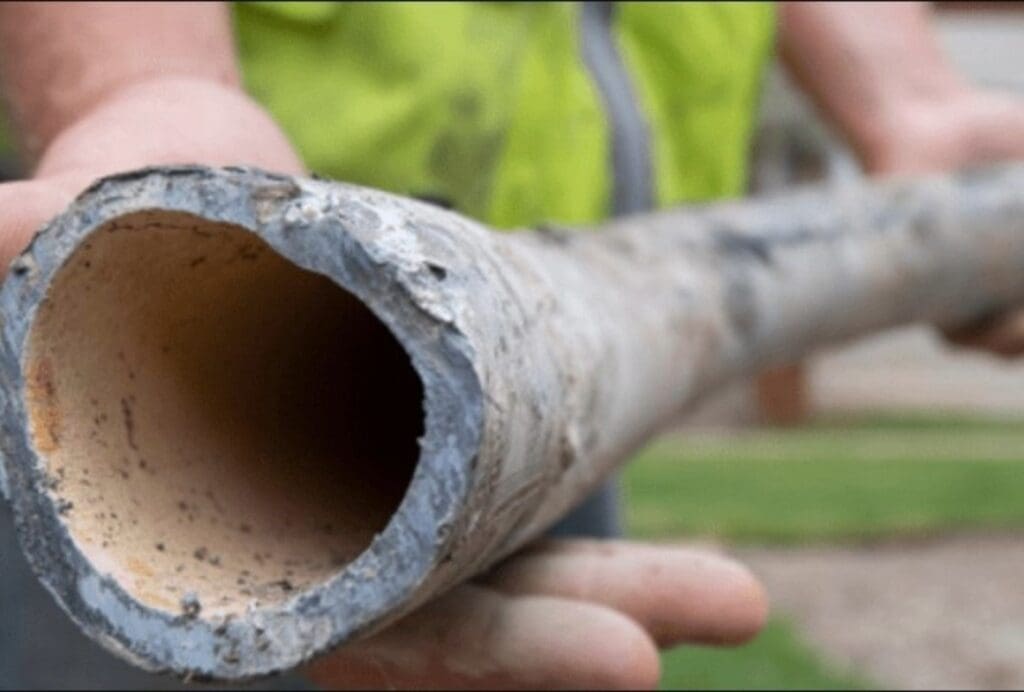
On Sept. 15, the American Water Works Association (AWWA) filed its opening brief in its Petition for Review of the Lead and Copper Rule Improvements as it seeks to address the feasibility of the lead service line replacement requirements in the law.
AWWA had originally filed a Petition for Review of the LCRI in the U.S. Court of Appeals for the District of Columbia Circuit in December of 2024. The final LCRI rule was filed on Oct. 8, 2024, requiring drinking water systems across the country to identify and replace lead pipes within 10 years, although the LCRI compliance deadline will not begin until 2027. The LCRI will also require more rigorous testing of drinking water and a lower threshold requiring communities to take action to protect people from lead exposure in water. But AWWA has had concerns about how it can be done effectively and affordably.
Upon filing its opening brief earlier this month, AWWA reiterated that while it shares the U.S. Environmental Protection Agency’s (EPA) desire to replace lead service lines on both public and private property as quickly as feasible, it said the proposed LCRI does not support this shared goal.
AWWA’s petition for review of the LCRI emphasized three areas of concern:
First, AWWA is concerned the rule asserts that if a water system can “access” a lead service line on private property, it has “control” of that service line. This assertion is incorrect and has the effect of expanding the scope of responsibility for a public water system beyond what it can enforce.
“Practically speaking, equating ‘control’ with ‘access’ would expand or contract the scope of a water system’s responsibilities (and with it, EPA’s jurisdiction) like an accordion any time a property owner, tenant, or third party granted or subsequently withheld any kind of ‘access’ to privately owned service lines,” the brief explains. “The scope of the system subject to EPA regulation and system operator responsibility cannot be ever shifting based on the whims of third parties.”
Second, the LCRI introduces a 10-year timeline for lead service lines to be removed, absent a special exemption. The logistical, labor, supply chain, and technical realities of complete lead service line removal and replacement nationwide, in small communities and large, make a ten-year window implausible.
Third, EPA dramatically underestimates the nationwide cost of lead service line replacement. Even with federal and state infrastructure loans, the cost of lead service line replacement will be borne by communities and their water customers.
“Most federal and state funding comes in the form of loans that water systems must repay, which are repaid with funds obtained from customer charges or water rates,” the brief explains. “While these funding sources can be useful to reduce household burdens, their impacts are marginal and limited to the subset of systems that are capable of accessing these funds.”
AWWA is asking the U.S. Court of Appeals for the District of Columbia to return the rule to EPA to create a final regulation that protects public health and is legal, feasible and affordable to implement.
The organization said that regardless of what regulation is in place, it remains committed to strong protections today as the industry works toward a future in which lead service lines are replaced in their entirety across the United States.
Source: AWWA






The City of Columbus, Ohio has recently sued the lead pipe companies for producing and promoting lead pipes long after they knew it was a major health hazard.
Why not other cities?
Below is the link to the Columbus city attorney’s statement.
https://www.reddit.com/r/Columbus/comments/1rrthq4/city_files_major_lawsuit_against_lead_pipe/
Also, a statement by “Unleaded Kids” on the issue
https://unleadedkids.org/columbus-ohio-lsl-pay/2026/03/12/
You might look at some of the evidence:
The lead industry and lead water pipes “A Modest Campaign” https://pubmed.ncbi.nlm.nih.gov/18633098/
This may also be of help: https://www.investigatetv.com/2024/12/02/lead-out-water-systems-nationwide-miss-crucial-deadline-identify-their-lead-pipes/
Richard Rabin
Arlington, MA