
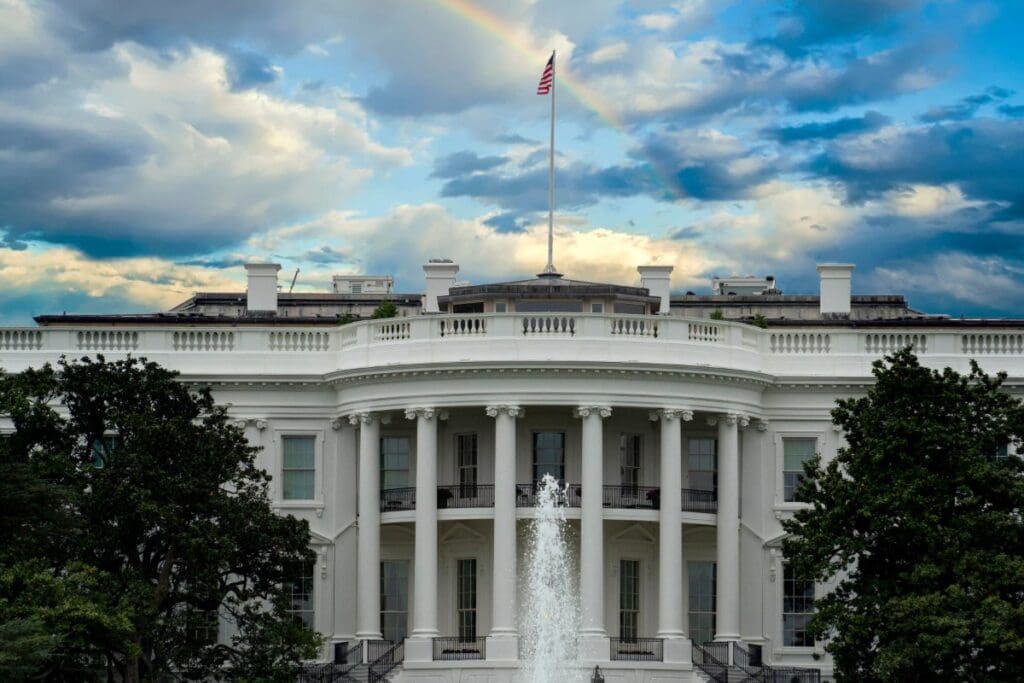
Last week the White House released its FY2026 Budget Request that proposed significant cuts across the federal government including a 55% reduction in annual spending at the U.S. Environmental Protection Agency (EPA).
In total, the administration’s budget proposal looks to cut $163 billion in federal government spending.
The National Association of Clean Water Agencies (NACWA) was among the first in the water sector to react to the news, saying in a press release that such a reduction in EPA spending could only be made possible by kneecapping the primary water infrastructure financing programs.
The Clean Water and Drinking Water State Revolving Funds (SRFs) help thousands of water utilities across the country complete projects that are integral to protecting public health and the environment. The SRFs revolve at the state level to provide local water utilities access to affordable financing and are bolstered through annual federal investment.
Together, the two programs represent about a third of EPA’s annual budget. Yet, NACWA said, the budget proposed by the White House would cut the SRF’s annual funding by nearly 90 percent.
NACWA said it strongly opposes the cuts and said that rather now is the time to intensify investment in critical infrastructure. The association said it urges the White House to reconsider the proposed cuts and is pushing Congress to ensure that funding for these critical programs is not reduced.
The association also testified last week at a Senate Environment and Public Works Committee hearing on water infrastructure. NACWA board member Kyle Dreyfuss-Wells, CEO of the Northeast Ohio Regional Sewer District (NEORSD), testified on strengthening federal water programs.
Dreyfuss-Wells noted that NEORSD has financed 111 wastewater projects to date using money from the Clean Water State Revolving Fund. Citing the district’s Shoreline Storage Tunnel, a $220 million project as part of its massive CSO reduction program, Dreyfuss-Wells said NEORSD saved an estimated $50 million by financing the project through the CWSRF at very favorable terms – 40 years at 1.57% interest – while also deferring principal payments for 20 years.
“Beyond these savings, we have found that the flexibility provided under the CWSRF program brings great value to our ratepayers as part of our overall effort for long-term rate control and stability,” Dreyfuss-Wells explained. “These flexibilities include below-market interest rates, deferred principal, extended terms, no need for an offering document or official statement, and no bond rating and bond counsel costs. It is these features of the CWSRF program that set it apart and are particularly helpful for smaller, less sophisticated borrowers with limited exposure to debt financing.”
The hearing also featured testimonies from Tom Goulette, city administrator and utility supervisor in West Point, Nebraska, on behalf of the National Rural Water Association and Eric Oswald, president of the Association of State Drinking Water Administrators.
Access to the SRF can be especially important for small utilities serving communities with fewer customers to shoulder rising costs. The SRFs work in concert with other federal financing tools, including the Water Infrastructure Finance and Innovation Act (WIFIA) program, which is aimed at larger, more complex projects and borrowers.
NACWA said it strongly urges the White House to reconsider these cuts and said it will continue to work with Congress and the administration to underscore water infrastructure funding as a bipartisan priority.
Republicans in Congress in recent years have proposed slashing funding for EPA, but in each case, the most severe spending reductions have been avoided. Congress will have the final say in EPA spending cuts as it considers agency spending for FY26.
Sources: NACWA, Senate EPW










Leave a Reply