Lead Service Lines: From Inventory to Replacement Planning and Programs

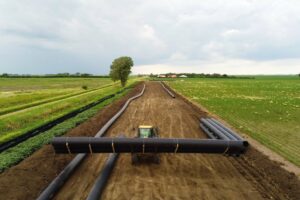
Photo courtesy of Cleveland Water.


Fall is here, which means the U.S. EPA deadline for utilities to complete water service line inventories is also here. Communities around the country have been working hard to complete those inventories. While this is an important step, there is a lot more to come. As water systems get closer to completing their service line inventories, it’s time to look forward to the next stage of Lead & Copper Rule compliance: the Lead & Copper Rule Improvements (LCRI).

Unless your community has been able to prove that lead has never existed in its system as a service line material, the next step is to plan for and develop a service line replacement program to remove all lead and galvanized requiring replacement service line pipes from your water system.

We’re already working with some utilities to plan their replacement programs and minimize unknowns within their inventory. For most states, replacement isn’t required until 2027 per the final LCRI, but for many communities with thousands of known lead service lines (LSLs), programs are beginning to take shape.

There is some preliminary planning to do before a program can be fully formed. Water systems will need to look at their funding sources, demographics, and future inspection needs to confirm inventory. If you haven’t already reviewed the guidance in the LCRI, here’s what to expect.

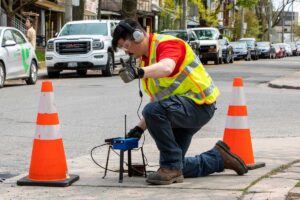
First, it’s important to address the unknowns within your existing service line inventory. Remember, unknowns will be treated as if they are LSL’s when calculating your annual replacement rate, so they will have to be properly identified. This is a crucial step to ensure accuracy and cost efficiency. To identify unknowns, a utility may need to perform additional records review, field investigation programs (meter box inspections, internal building inspections, potholing, etc.), collect information from customers, leverage machine learning or statistical analysis, and capture data during normal daily operations.

RELATED: 3 Things to Consider When Creating A Lead Service Line Inventory

Next, think about how a full LSL replacement will be conducted. There are some major factors here. First, communication is key before initiating and throughout implementation of a full or partial replacement. From outreach to key stakeholders and community groups to individual homeowners, this is a critical component for replacement success. Additionally, water utilities will need to coordinate with other county, city or town departments. This may include public works, planning, and transportation departments to facilitate the involvement of other ongoing or planned paving programs and community projects, including major developments.

What matters most to interested parties? Customers really need to understand directly why this is being done and its importance. Some of our recent projects have gone smoothly because we had meaningful, direct conversations with residents in various communities. Our teams in Jackson, Mississippi, and Fall River, Massachusetts, have been proactively replacing LSLs, coordinating with customers at and inside their homes, and taking time to help them understand the impacts of LSL replacement.

Within the realm of outreach, it can also be helpful to conduct contractor outreach. Although this isn’t required, it will ensure that contractors bidding on the replacement work fully understand the work required, and the risks associated with service line replacements. This could mean contacting regional contractors, or even expanding out nationally if the replacement program is large enough to attract contractor relocation. A contractor training program may be a good idea depending on the location or type of replacement method—whether that’s open-cut, pipe-pulling, pit-launched boring, or surface level direction drilling.

We also recommend utilities take some time to brainstorm their replacement strategy and the order in which to approach service line replacement. Prioritization is key, based on various factors like disadvantaged and environmental justice communities and populations that could be more sensitive to lead, such as neighborhoods with high numbers of children, schools and childcare facilities.

And then, of course, there should be some planning done around funding. How will lead service replacement programs be paid for? What funding sources are available in your community? The Bipartisan Infrastructure Law and Drinking Water State Revolving Fund may have money available, but there are processes to secure this funding that each water system needs to explore. Whether it’s large government loan programs or smaller grants, there are several sources available. The Lead Service Line Replacement Collaborative is a great resource to get more information.

Now let’s talk about the actual replacement program. With meaningful preliminary planning, program development will run much more smoothly.

When building replacement programs, keep in mind that the best method of pipeline construction may vary based on geography or climate. Spend some time in the planning phase learning about what method will work best for your community, whether that’s trenchless, open-cut, or another option.

Additionally, the program will need to provide specific customer communications to guide them through the replacement process. This includes flushing protocols, what to expect during a replacement, and multiple communication touchpoints leading up to and on the day of replacement. Water will be off for an extended period of time, typically about one day, and customers will need to be aware of the timing.

As a best practice, a homeowner should be on site during replacement. When the program is underway, it’s important that contractors document replacement details within a work order and take several photos before, during, and after the work is completed.

Once a replacement is complete, it’s time to store data. We recommend choosing a software that can serve as a centralized hub, such as Esri’s LSL Solution and Replacement Manager. Construction managers and inspectors may also leverage the use of Esri Field Maps or Survey123 for data capture. Our teams have used some of these software options for our LCRR work in Jackson, Mississippi.; North Port, Florida; Westerville, Ohio; Hamilton, Massachusetts; and Vail Resorts.

Every program should also include follow-up with the homeowner after the service line replacement is complete. Work with contractors to offer customer assistance with the required post-replacement flushing, and make sure the program accounts for delivering pitcher filters and six months’ worth of cartridges for homeowners. At that point, you should reiterate to the homeowner that the utility will follow up to perform the required lead sampling within three to six months.

Water systems have several years of work ahead when it comes to service line replacement planning, programming, and construction. While it’s certainly not an easy undertaking, starting early, planning regularly, and using effective communication will make a big difference in every community.


Brendan O’Brien, P.E., is a project manager for water for Stantec. He has 10 years of engineering experience in water, wastewater and stormwater distribution and conveyance system design and construction. He leads Stantec’s Lead and Copper Rule Revisions (LCRR) Growth Initiative team and manages several LCRR inventory projects.

Leave a Reply

Your email address will not be published. Required fields are marked *