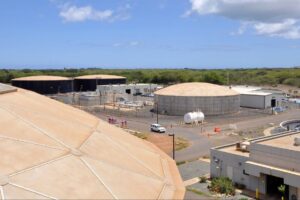
Out-of-this-World Leak Detection
New technology solutions are being introduced to the U.S. market to address water loss, including one revolutionary method that detects non-revenue water leaks by analyzing spectral images from satellites.
In 2008, the Groundwater Replenishment System (GWRS) made history as the largest water purification and reuse project of its kind in the world. In 2015, the GWRS made history again as its Initial Expansion came online, providing an additional 30 million gallons of water per day (MGD) to the Orange County Groundwater Basin.
There have been many questions raised in recent months about what the water sector can learn from the water crisis in Flint, Michigan. Some would say the crisis, while a nightmare for the residents of Flint, has reinvigorated the discussion around the importance of our water systems, whether it’s aging infrastructure, management of water treatment practices or the obvious funding gap that exists for needed projects.
Few people need to be reminded of water’s importance. Along with energy, it is essential for everyday life. Water provides sustenance, supports industry and irrigates fields. But city administrations are struggling to meet rising demand from growing populations while contending with issues such as water quality, flooding, drought and aging infrastructure.
Since its creation in 1972, the Northeast Ohio Regional Sewer District has made great strides in updating the region’s sewer infrastructure, investing $4 billion in wastewater treatment plants, interceptor and relief sewers, combined sewer overflow control, and other facility upgrades.
In February, the Obama Administration announced its Fiscal Year 2017 budget for the U.S. Environmental Protection Agency (EPA), which lays out a strategy to ensure that steady progress is made in addressing known environmental problems and ensuring the agency and its partners in environmental protection, states and tribes are positioned to meet the challenges of the future.
The National Association of Clean Water Agencies, the Water Environment Research Foundation, and the Water Environment Federation collectively hatched the Utility of the Future (UOTF) concept in 2013 in The Water Resources Utility of the Future: A Blueprint for Action.
Stantec Inc., has announced it will acquire MWH Global, Inc., a Broomfield, Colorado-based engineering, consulting and construction management firm focused on water and natural resources for built infrastructure and the environment.
For years, the water department for the City of Evans, Colorado, has spent several days a month collecting data from each of the city’s 6,500 aging water meters. Aging meters often lead to inaccurate results, which for many years forced the utility to estimate the monthly water use for nearly one quarter of its residents.
The Design-Build Institute of America (DBIA) will be hosting its 2016 Design-Build for Water/Wastewater Conference in Charlotte, N.C., April 20-22. The DBIA aims to educate owners on the benefits of design-build delivery, which helps projects achieve the best value while meeting schedule, cost and quality goals.