
By Steven Folkman
Most water professionals are well aware that in 2009, the American Society of Civil Engineers (ASCE) issued its Infrastructure Report Card and gave a D- to drinking water and wastewater infrastructure. In a small sign of improvement, the 2013 ASCE Report Card graded drinking water and wastewater a D, and in 2017, upgraded wastewater further to a D+. Things are getting better, right? Well, that is a difficult question to answer.
In 2012, Utah State University published a survey of water main break rates in the United States and Canada. This survey was repeated and a new report published recently. The goal of both surveys was to get a measure of overall status of water main infrastructure. It should be noted that the 2018 study was conducted with support from the Uni-Bell PVC Pipe Association.
Continue Reading
This archived story is available after you provide your email address and accept our Privacy Policy.

 The Next Phase of Digital Transformation for Water Utilities
September 28, 2026
The Next Phase of Digital Transformation for Water Utilities
September 28, 2026
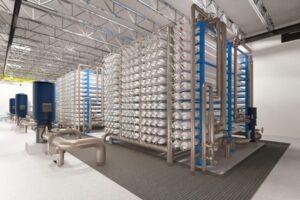 Beyond the MCL: Why Manufacturing Validation Determines Whether PFAS Treatment Actually Works at Scale
July 27, 2026
Beyond the MCL: Why Manufacturing Validation Determines Whether PFAS Treatment Actually Works at Scale
July 27, 2026
 Explaining the Decline in WIFIA Loan Volume: Part 2
December 8, 2025
Explaining the Decline in WIFIA Loan Volume: Part 2
December 8, 2025





By Steven Folkman
Most water professionals are well aware that in 2009, the American Society of Civil Engineers (ASCE) issued its Infrastructure Report Card and gave a D- to drinking water and wastewater infrastructure. In a small sign of improvement, the 2013 ASCE Report Card graded drinking water and wastewater a D, and in 2017, upgraded wastewater further to a D+. Things are getting better, right? Well, that is a difficult question to answer.
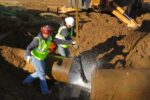
In 2012, Utah State University published a survey of water main break rates in the United States and Canada. This survey was repeated and a new report published recently. The goal of both surveys was to get a measure of overall status of water main infrastructure. It should be noted that the 2018 study was conducted with support from the Uni-Bell PVC Pipe Association.
Continue Reading
This archived story is available after you provide your email address and accept our Privacy Policy.
Share this post